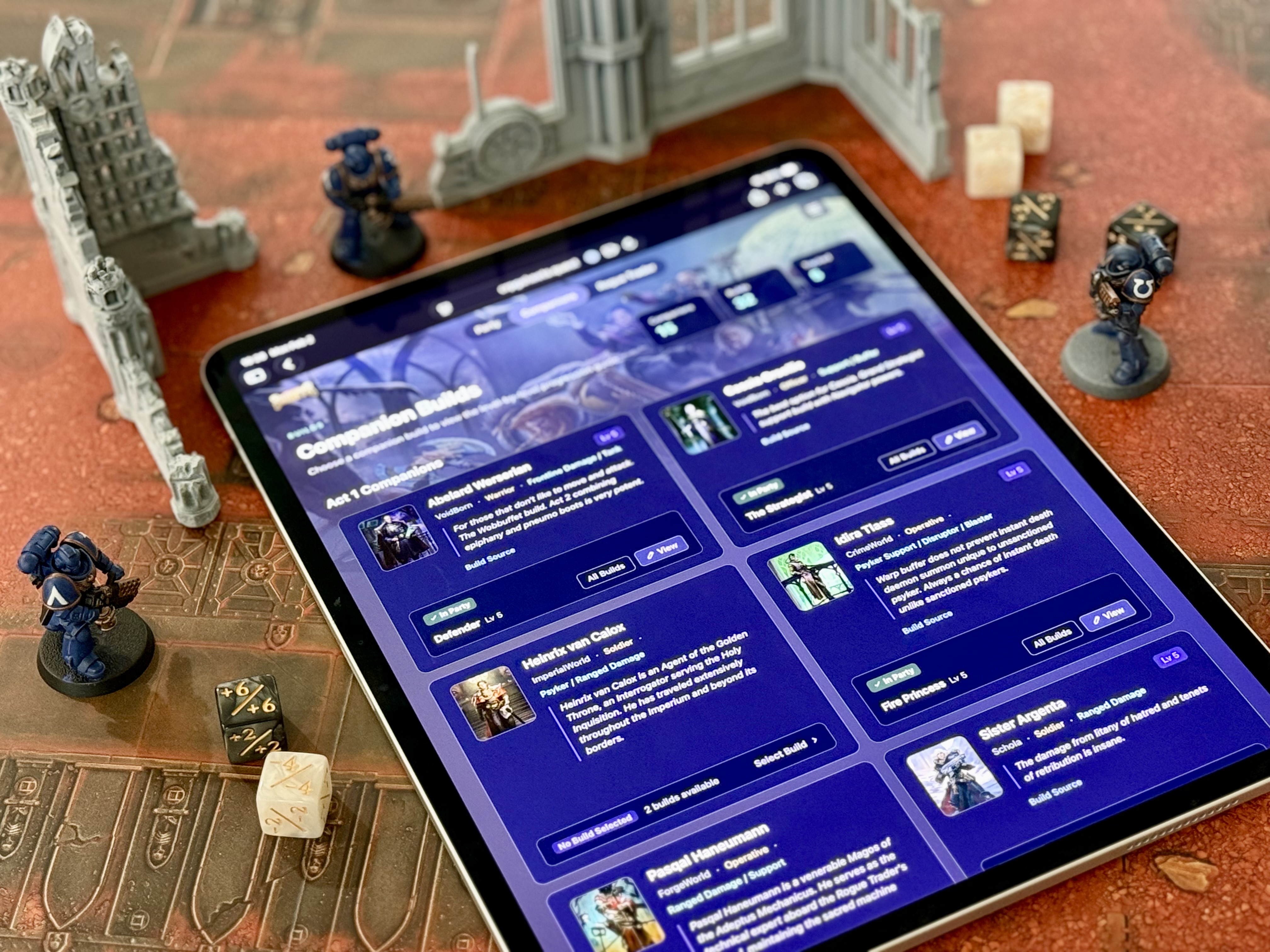
If you've ever tried to follow a character build guide for a complex cRPG like Warhammer 40K: Rogue Trader or Baldur's Gate 3, you know the pain. Build information is scattered everywhere—buried in hour-long YouTube videos, lost in Reddit threads, or locked in sprawling Google Sheets that require a second monitor just to reference.
And even when you find a great build, actually tracking it during gameplay is another challenge entirely. Alt-tabbing to a spreadsheet every level-up breaks immersion. Scrubbing through a video to find "what do I pick at level 23?" is tedious. I wanted something better.
I wanted a tool that would let me:
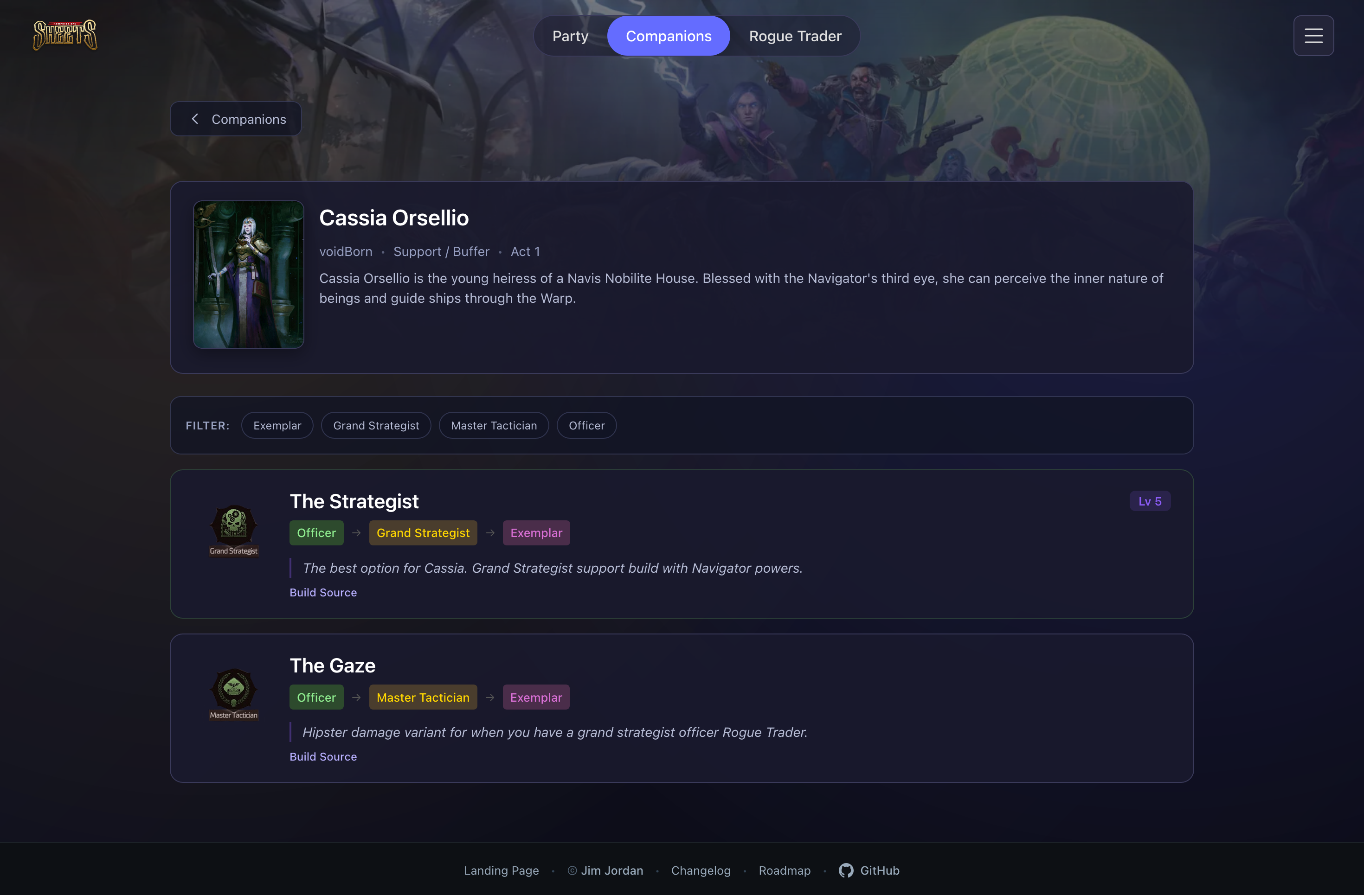
- Discover optimized builds from the community
- Track my progress through those builds during actual gameplay sessions
- Manage multiple characters across different playthroughs
So I built cRPG Sheets.
What It Does
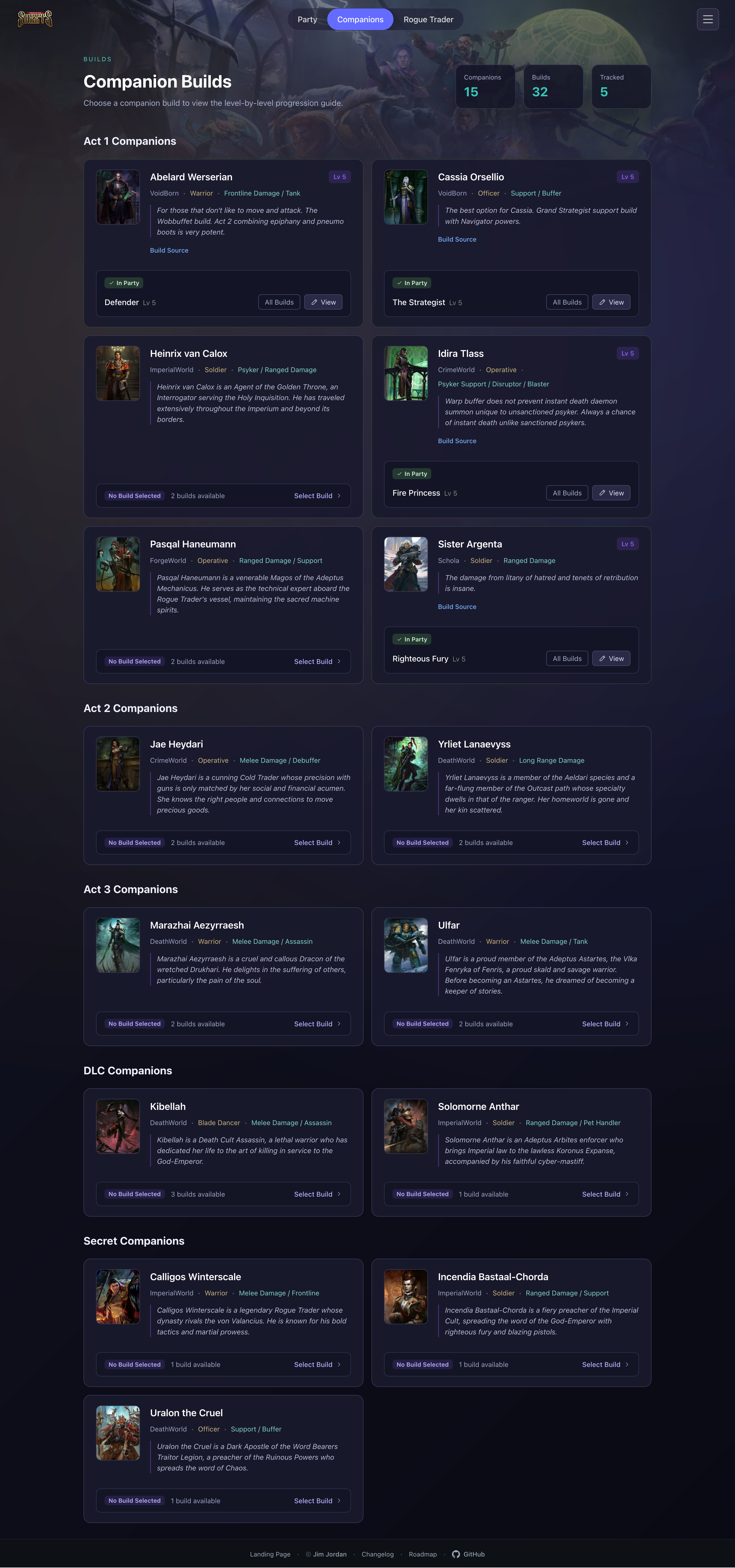
cRPG Sheets is a companion app for managing character builds in complex RPGs. Think of it as a digital character sheet that knows your build path.
For each character, you can:
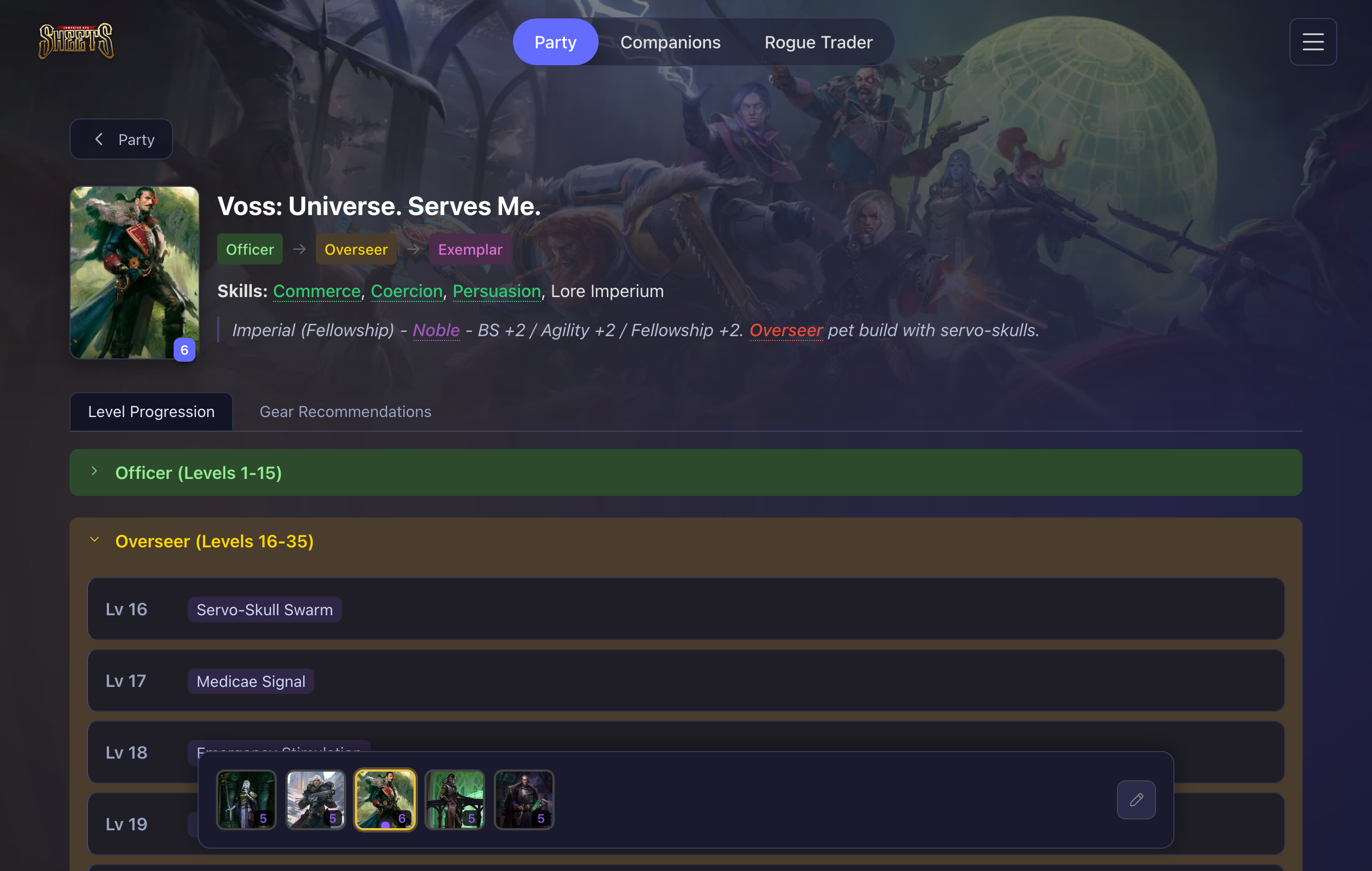
- Follow level-by-level progression guides (talents, abilities, feats)
- Track your current level and see exactly what to pick next
- View gear recommendations organized by slot
- Save multiple builds across different playthroughs
At the party level:
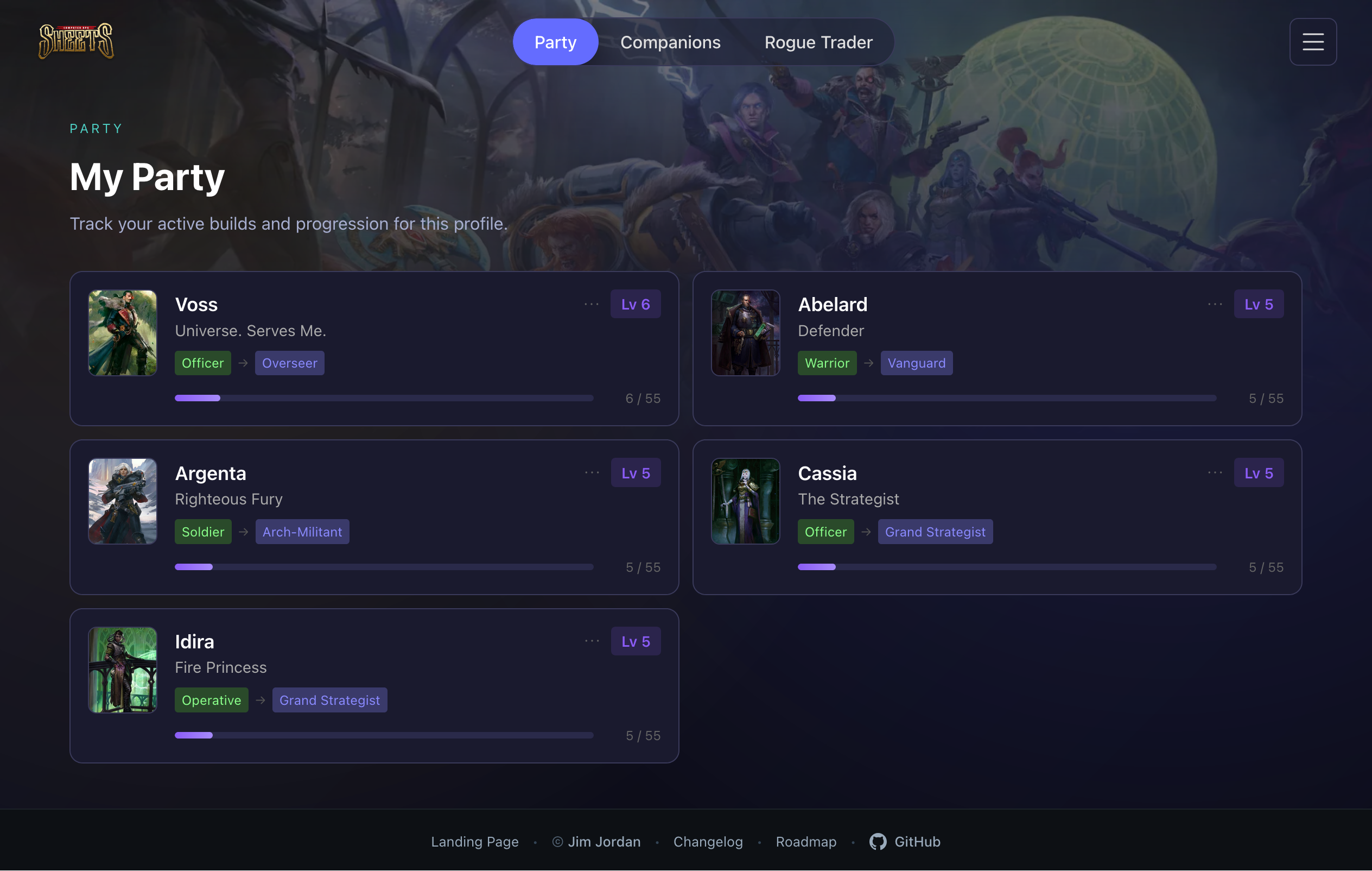
- Create separate profiles for each playthrough
- Manage your full party roster with a visual party bar
- Export/import profiles to share or backup your data
Currently it supports Rogue Trader (full support for all 16 companions across 55 levels) and Baldur's Gate 3 (beta, with 10 companion builds).
Technical Decisions
A few architectural choices I'm happy with:
Offline-first, privacy-respecting: All data lives in your browser via IndexedDB. No accounts, no servers, no tracking. Your build data never leaves your device unless you explicitly export it.
Game-agnostic architecture: Each game is a self-contained module with its own types, components, and data. Adding support for a new game means creating a new folder and registering it—the core app doesn't care about game-specific details like "archetypes" vs "subclasses."
Minimal stored state: Builds in the database only store a guide reference and your current level. The actual guide data (55 levels of talent choices) stays in static JSON files. This keeps the database lean and makes updates easy.
Security by default: Import validation sanitizes URLs, enforces file size limits, and strips unexpected fields. Users share profile exports, so treating imported data as untrusted was important.
The Stack
- React 19 + TypeScript
- Dexie (IndexedDB wrapper) for persistence
- Vite for builds
- Netlify for hosting
- No backend
What's Next
Planning to add support for Divinity: Original Sin 2 and Disco Elysium. The game-agnostic architecture should make this straightforward.
Try It
If you're deep into a Rogue Trader playthrough or planning a BG3 honour mode run, give it a shot. Your party will thank you.