Note: I designed this product as part of my work at Funsize.
The Challenge
In 2016, I worked with EA Games on a unique problem: how do you efficiently gather meaningful feedback from playtesters during the critical pre-launch phase of mobile games? Traditional methods—surveys sent via email, bug reports filed in separate tools—created friction and resulted in lower response rates and less contextual feedback.
The solution was EA Sandbox, an app-within-an-app that embedded feedback collection directly into the playtesting experience.
The Vision
The director I collaborated with established a clear vision: create a lightweight platform where playtesters could access pre-release EA mobile games and provide feedback without leaving the experience. The app needed to:
- Showcase multiple games in various stages of development
- Set proper expectations about pre-alpha/beta quality
- Capture both structured feedback (surveys) and unstructured feedback (chat)
- Make providing feedback feel rewarding, not burdensome
My role was to take this vision and execute every screen, interaction, and flow.
Key Features & Design Decisions
1. The Game Hub
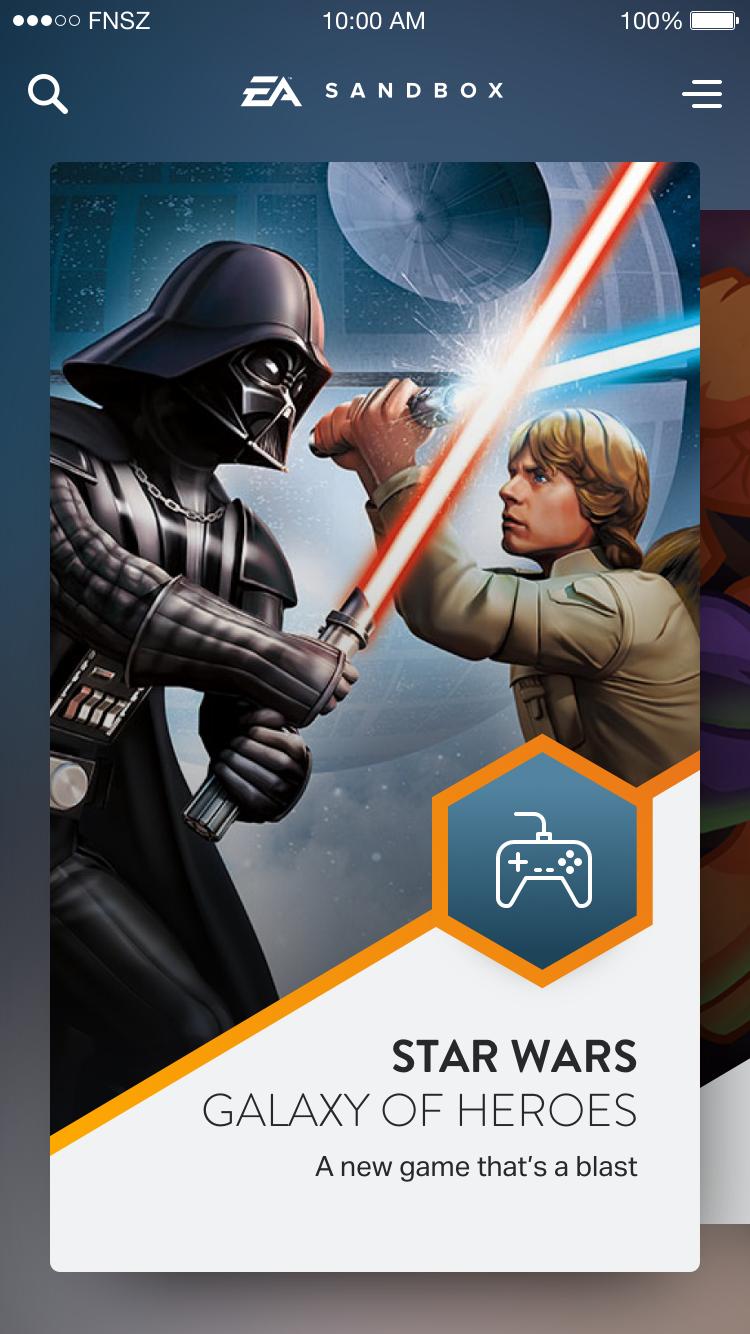
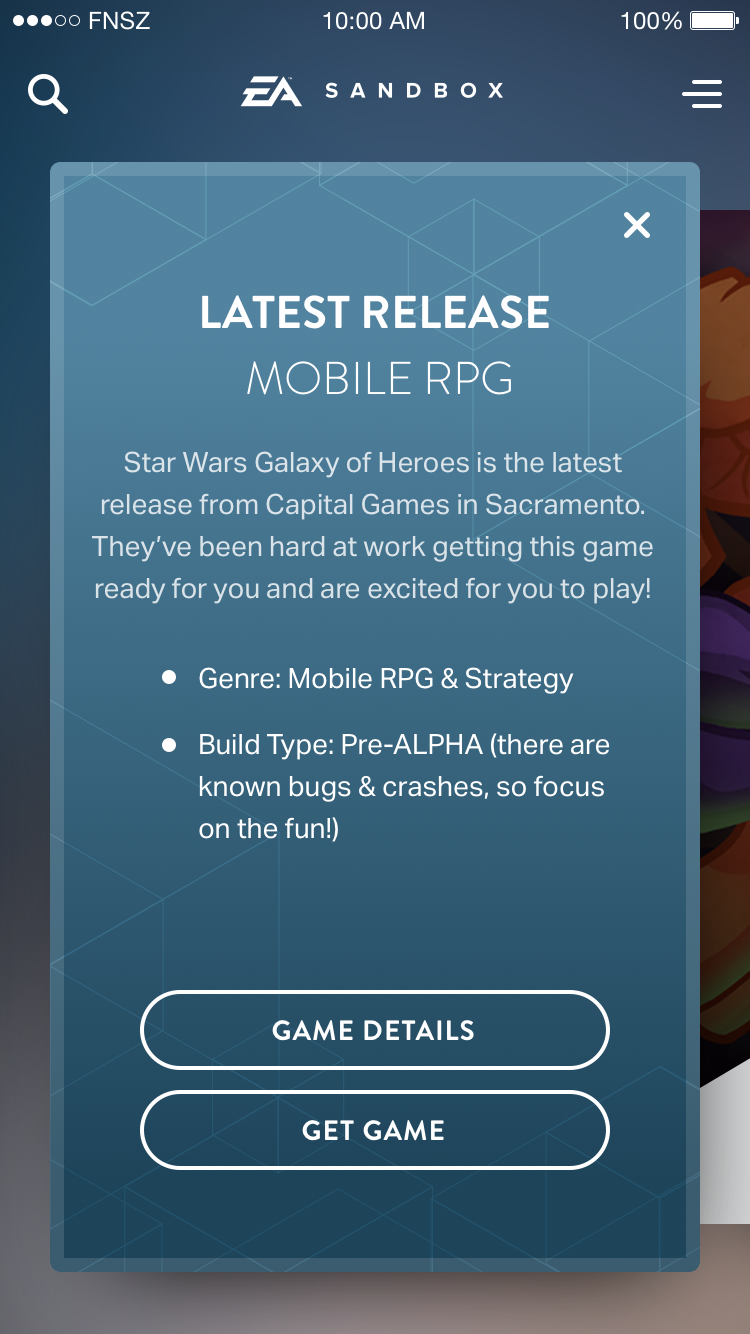
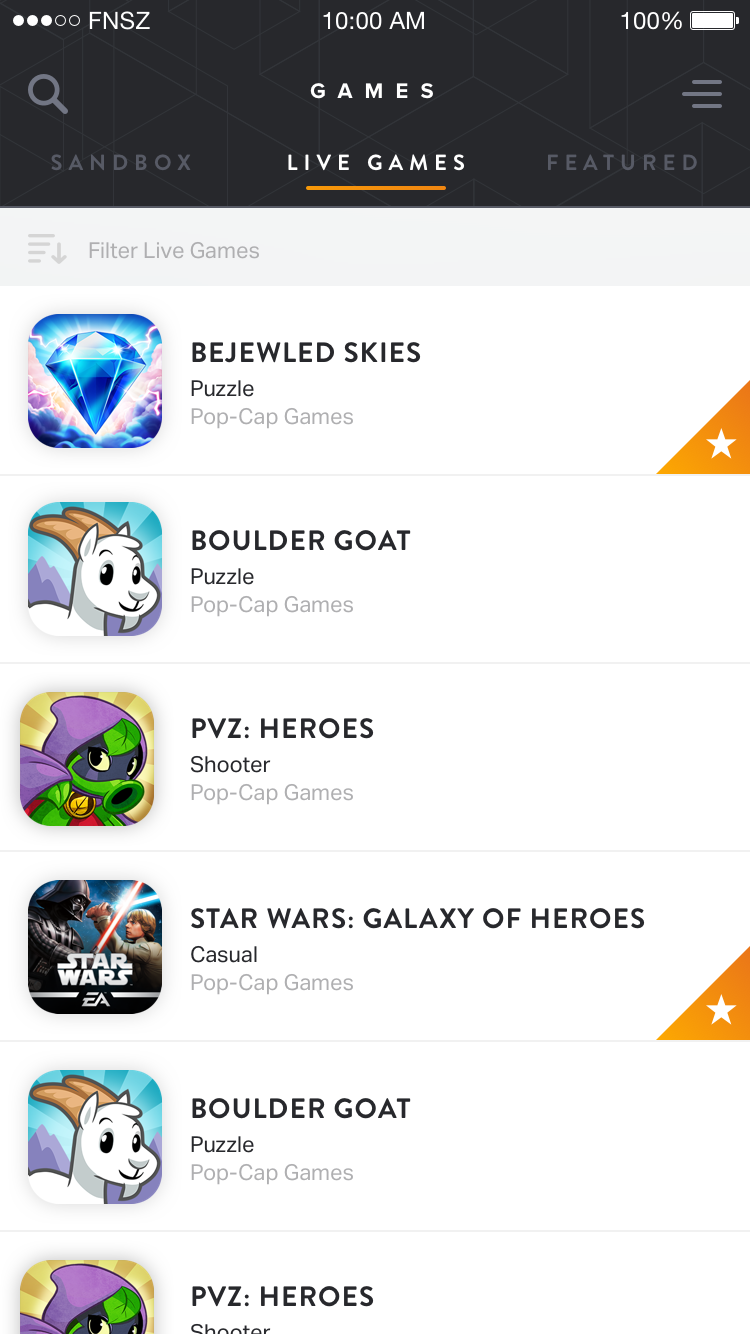
The Sandbox and Live Games tabs gave players a central place to discover testable games. Each game card clearly indicated its status (Pre-Soft Launch, Featured) and showed engaging key art. This visual-first approach helped players quickly identify games they wanted to test.

2. Setting Expectations
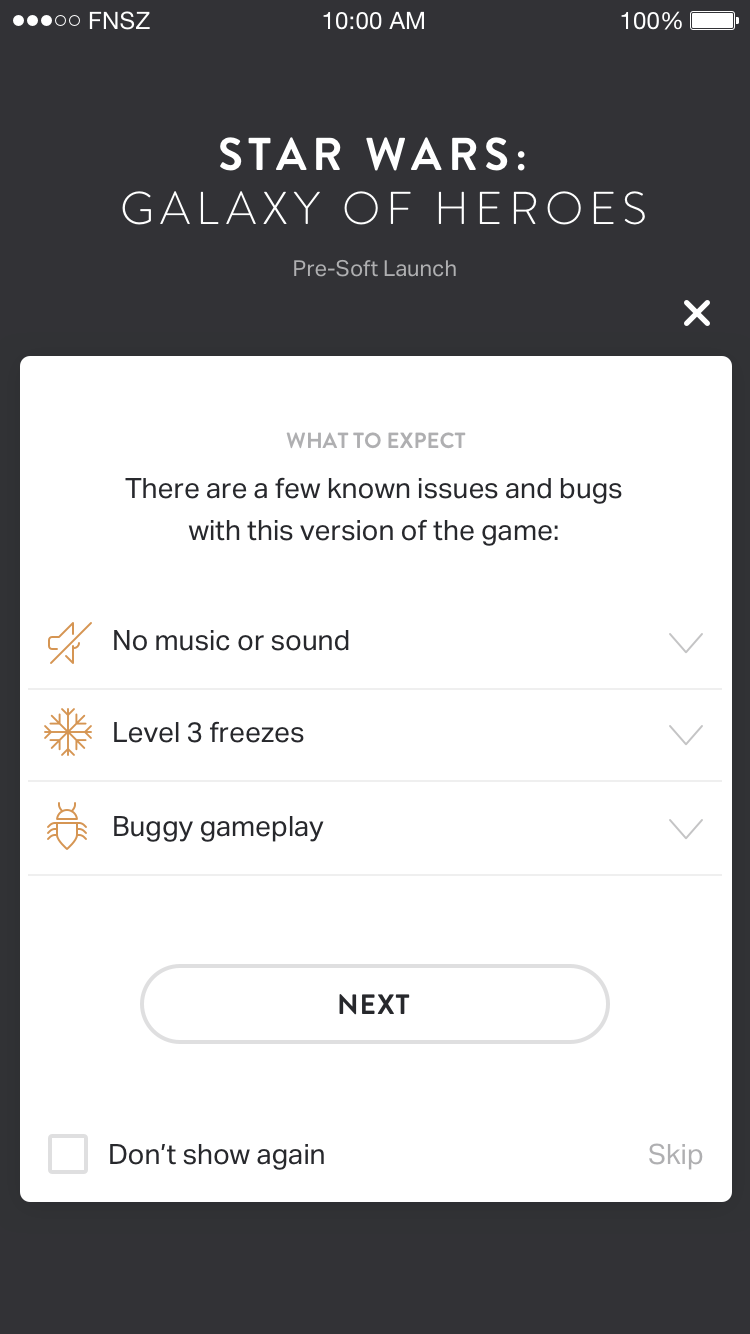
One of the most important screens was "What to Expect" - a transparent list of known issues before players even started. This served two purposes:
- It prevented redundant bug reports about known issues
- It framed the experience correctly, turning potential frustration into collaborative problem-solving
3. Contextual Feedback Collection
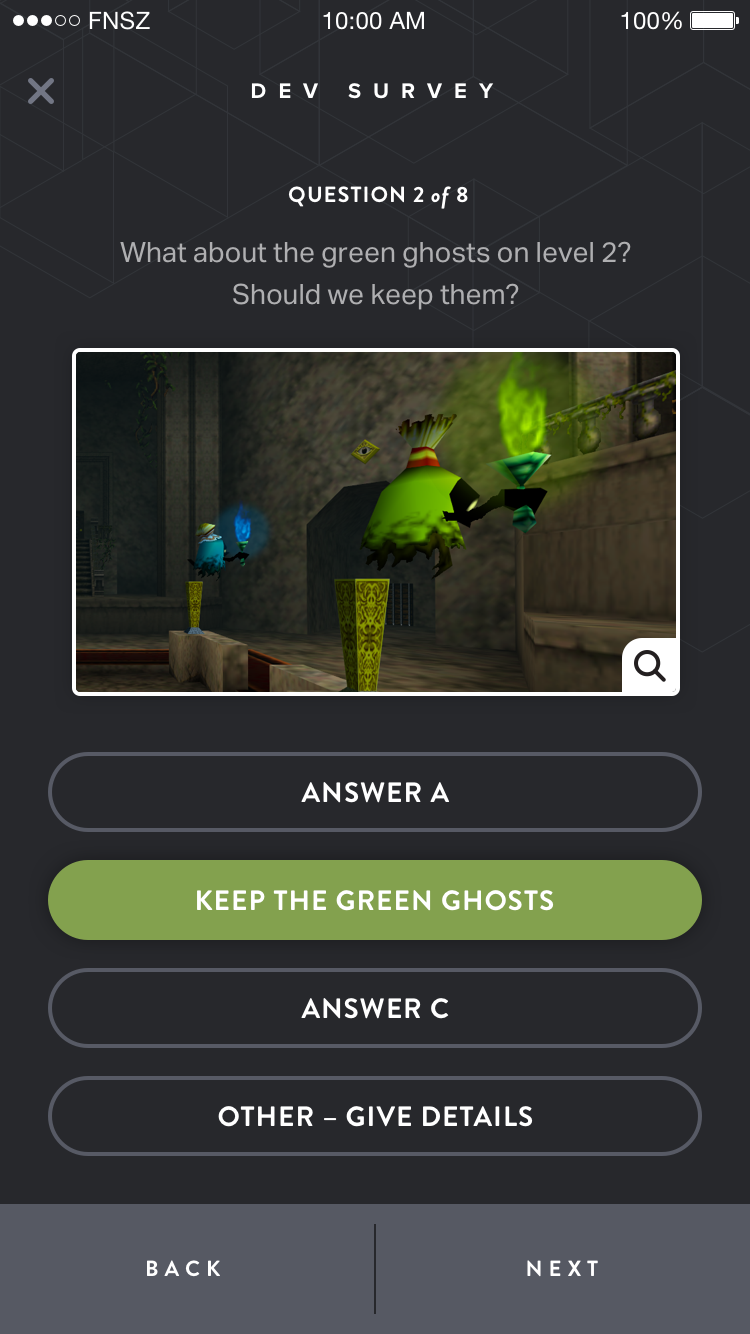
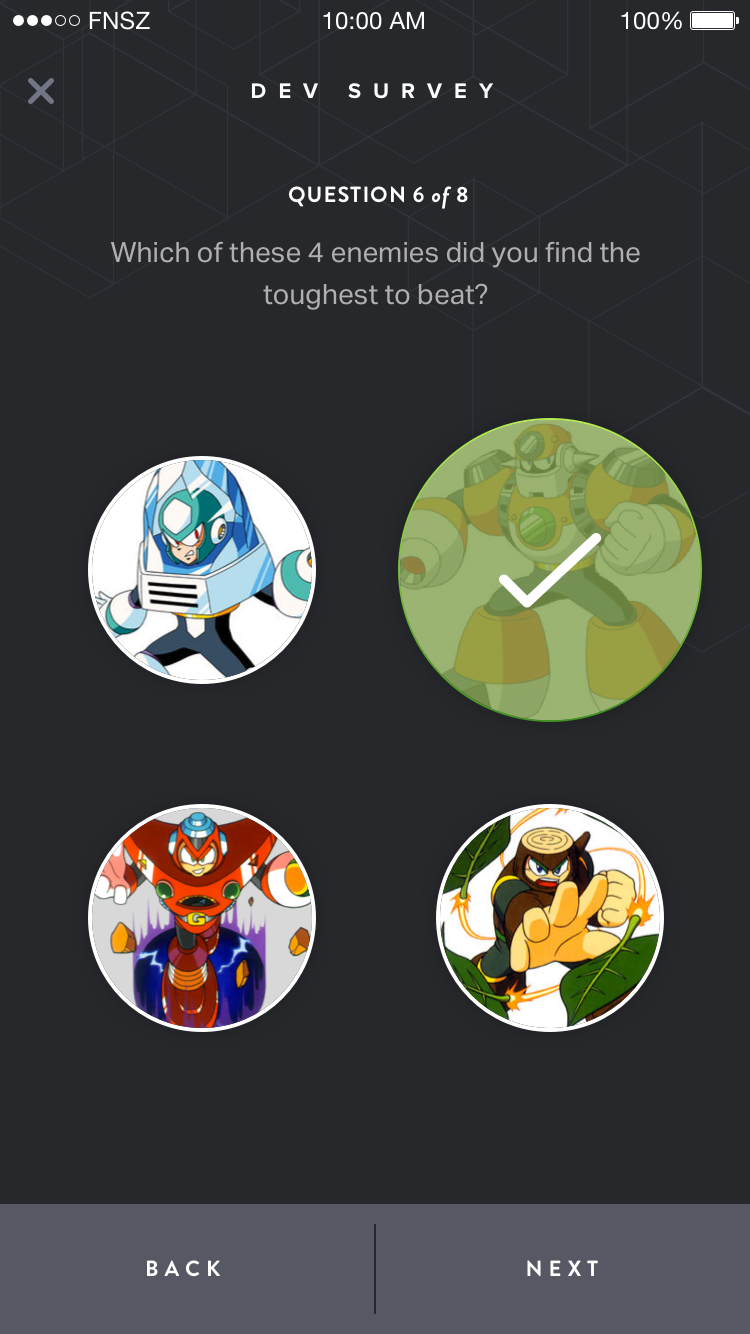
Rather than waiting until the end of a play session, we could trigger feedback requests at specific moments:
- Targeted surveys asking about specific features ("What about the green ghosts on level 2?")
- Visual surveys using actual game assets to ask about difficulty or character design
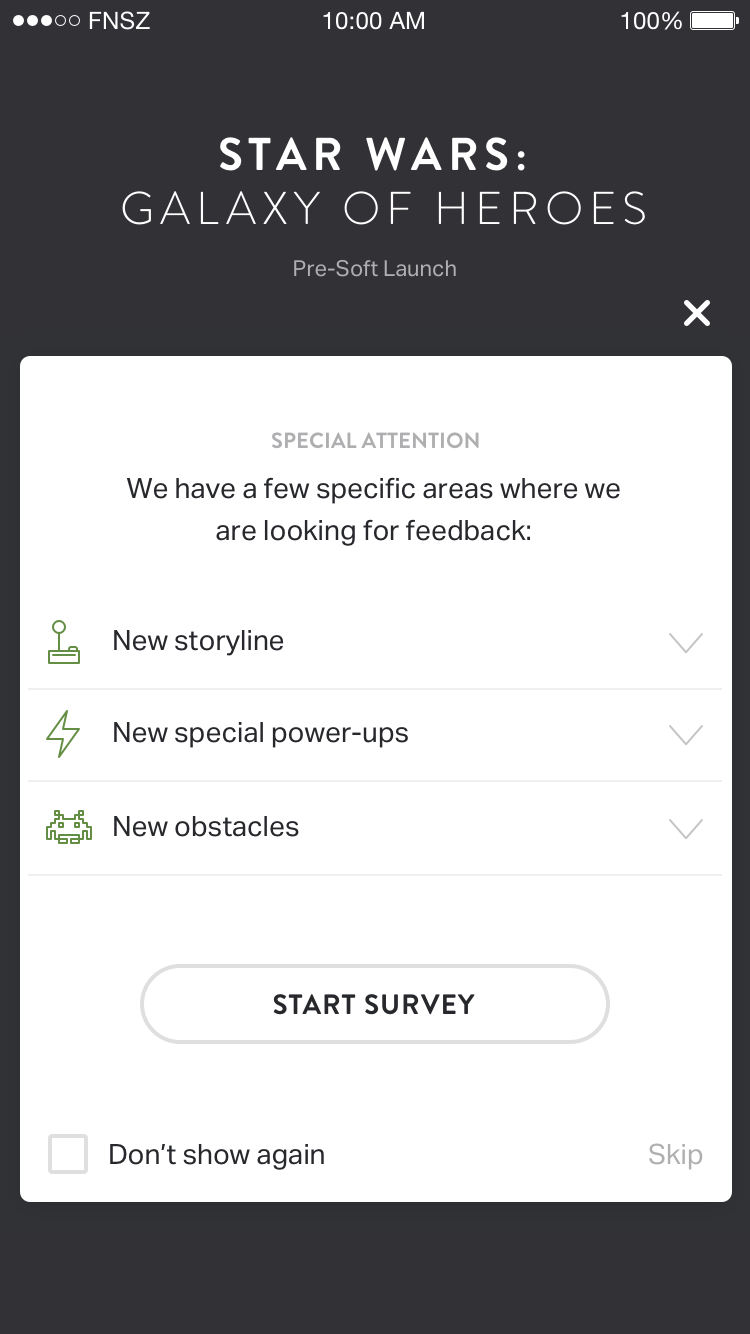
- Special Attention prompts highlighting areas where developers specifically needed input
4. The Evolution Tab
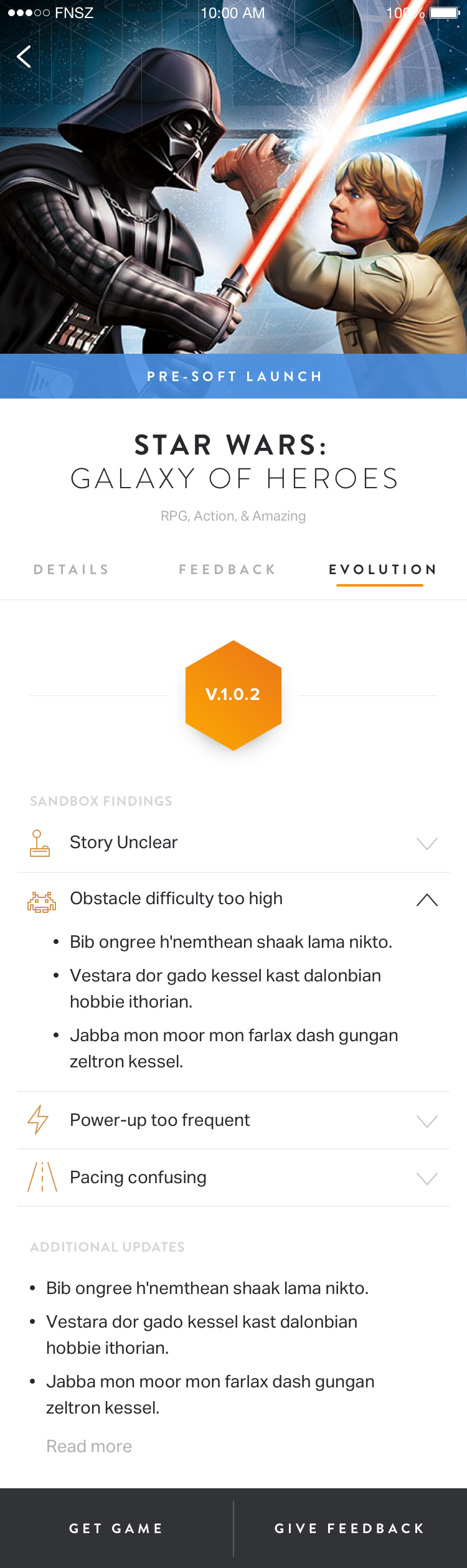
This was a transparency play. Players could see previous build versions, read sandbox findings from other testers, and track how their feedback was being implemented. It created a sense of collaboration and showed players their input mattered.
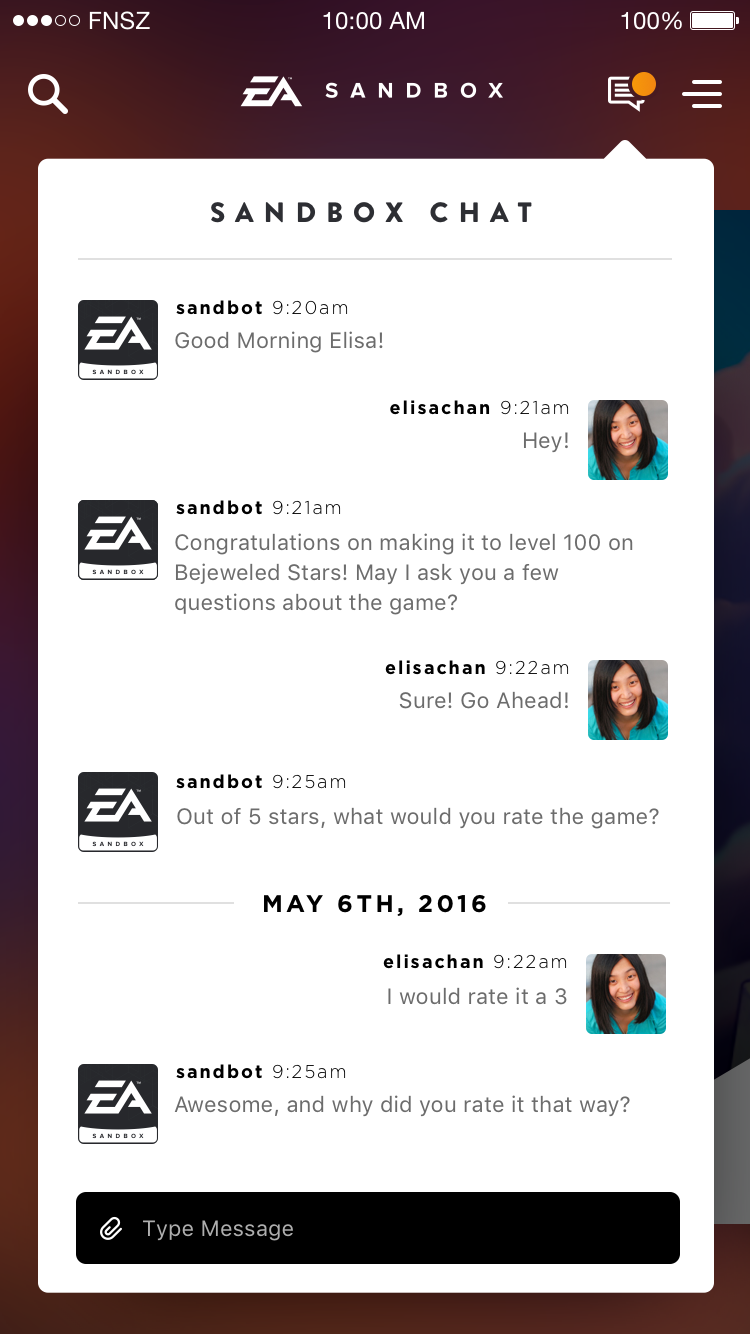
5. Sandbot Chat
An AI-assisted chat interface made giving unstructured feedback feel conversational rather than like filling out a form. The bot could congratulate players on milestones, ask follow-up questions, and maintain context across the conversation.
6. Persistent Reminders
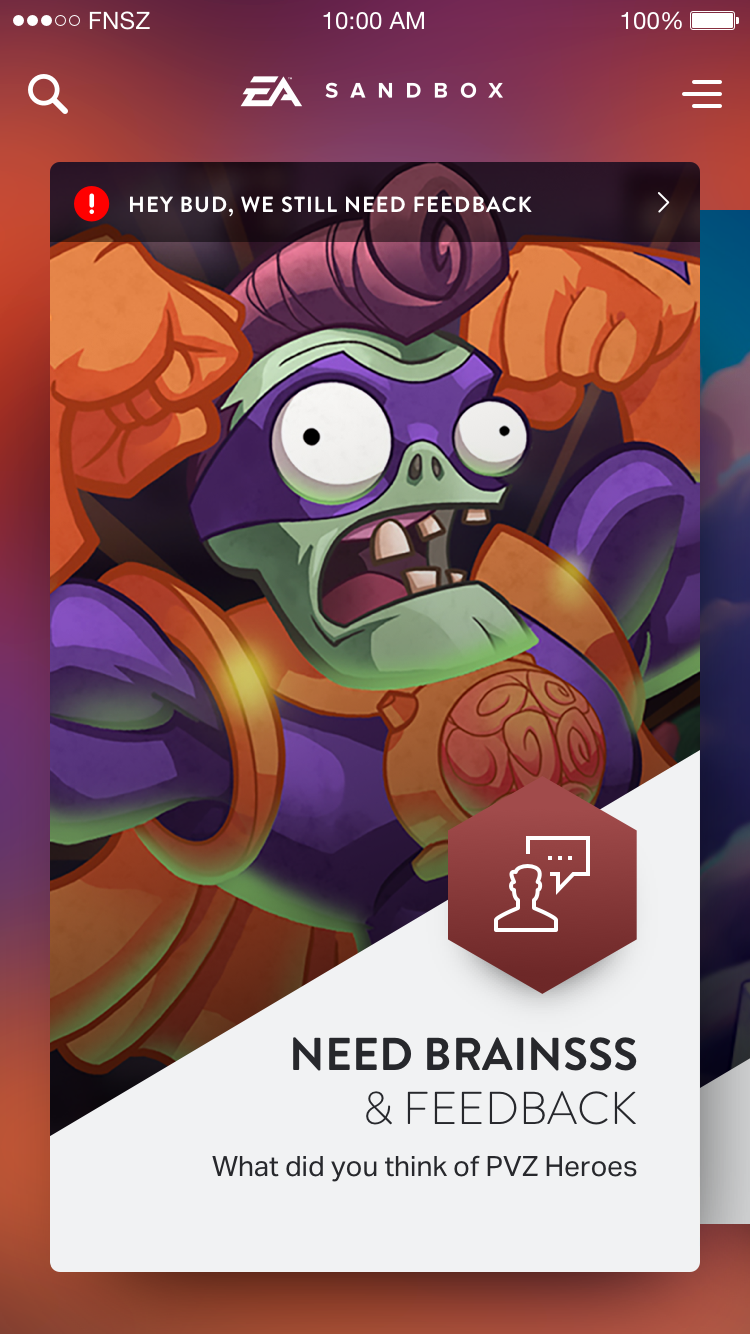
The feedback alert cards used playful game characters (like the PVZ zombie) to re-engage players who hadn't completed surveys. These needed to be persistent enough to be effective but not so aggressive they became annoying.
Execution Challenges
Every screen needed to work across:
- Different game genres (RPG, puzzle, casual)
- Multiple stages of development (pre-alpha through soft launch)
- Various feedback types (qualitative chat, quantitative surveys, visual selection)
The design system needed to be flexible enough to accommodate EA's diverse game portfolio while maintaining a consistent Sandbox brand that didn't compete with or diminish the individual game aesthetics.
Impact
EA Sandbox provided a dedicated channel for pre-launch feedback that was:
- More contextual - players gave feedback while the experience was fresh
- Higher quality - structured surveys got specific answers to specific questions
- More transparent - players could see how their feedback influenced development
The app represented a shift from treating playtesters as subjects to treating them as collaborators in the development process.
Reflection
This project taught me a lot about designing for engagement in contexts where the primary action (playing games) and the secondary action (providing feedback) are potentially at odds. The key was making feedback feel like a natural extension of the play experience rather than an interruption.