Note: I designed this product as part of my work at Funsize.
In 2016, Windows PCs didn’t have a meaningful, unified native storefront.
Software distribution was fragmented. Hardware upsells lived on the web. Updates, drivers, and utilities were scattered across installers, support pages, and OEM tools. The Microsoft Store, as we know it today, didn’t yet exist as a credible, default destination.
Dell Neon was a conceptual project to explore what a first-party, native Dell storefront could look like if it were designed as part of the operating system experience—not bolted on after the fact.
This work was exploratory by design. It wasn’t intended to ship directly, but to help Dell imagine how commerce, updates, and ownership could coexist in a single, coherent system.
The Context: Windows in 2016
At the time:
- Most software was still discovered on the web
- OEM utilities were fragmented and utilitarian
- App stores on desktop were unproven
- Post-purchase experiences ended at checkout
Yet Dell had a unique opportunity:
- A direct relationship with hardware owners
- Deep knowledge of device configuration
- Trust as the manufacturer, not a third party
The question became:
What if buying, downloading, updating, and learning about your PC lived in one native place?
Core Design Goals
1. Native, Not Webby
Neon was designed to feel like part of Windows:
- Fast
- Lightweight
- System-aware
- Respectful of OS patterns
This was intentionally not a browser wrapper or marketing surface.
2. Commerce Without Aggression
The experience explored a softer model of upsell:
- Contextual offers
- Clear value propositions
- Easy dismissal
- No dark patterns
Offers were treated as suggestions, not interruptions.
3. A Single Surface for Ownership
Neon unified what was previously scattered:
- Apps
- Hardware accessories
- Updates
- Ratings
- System compatibility
- Download and shipping status
Ownership didn’t end at purchase—it continued through setup and use.
Key Experience Areas
Home & Notifications
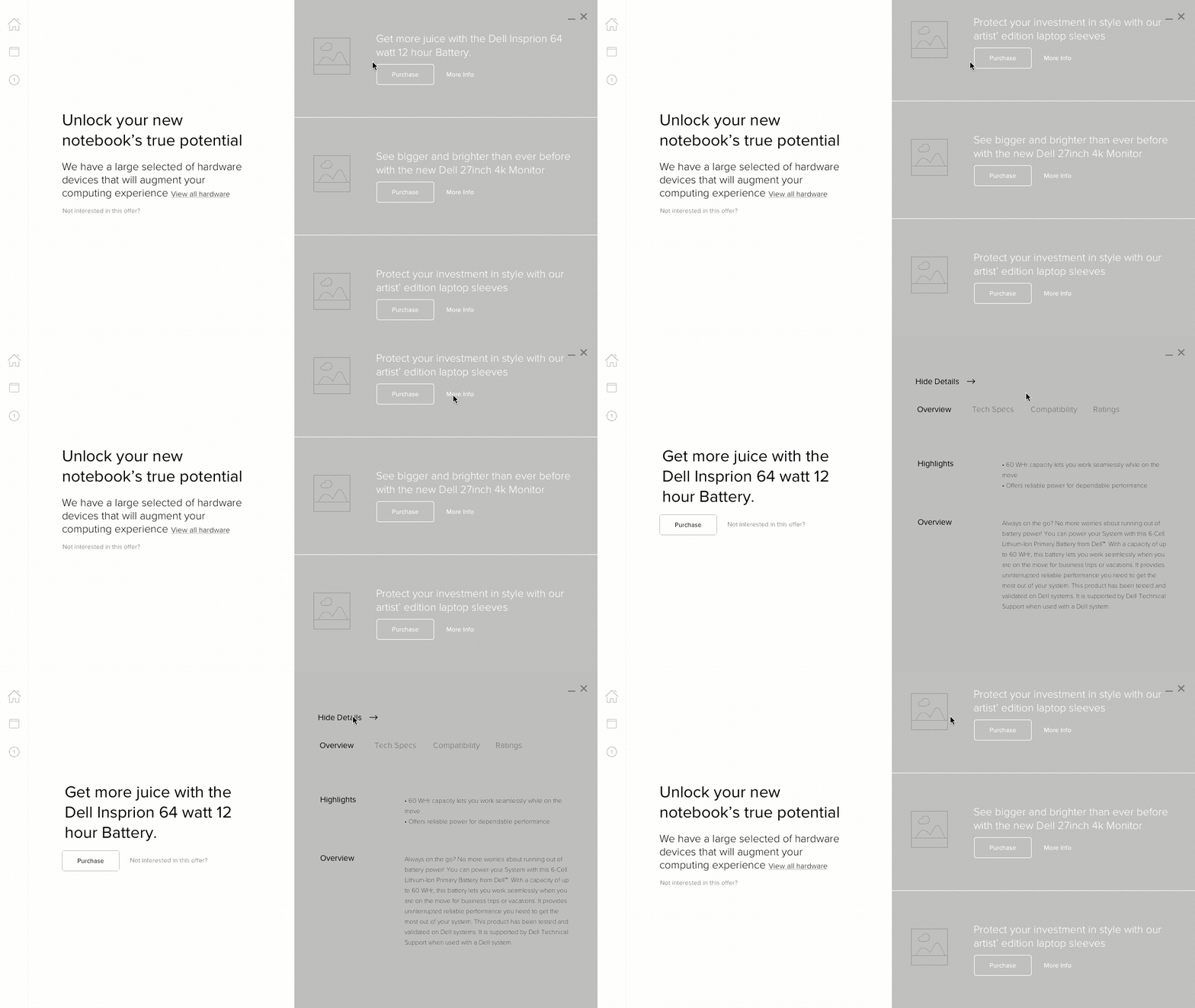
The home surface balanced restraint and relevance:
- Offer notifications surfaced thoughtfully
- Updates and downloads were visible but quiet
- Users always understood why something appeared
The goal was awareness without pressure.
Offers as First-Class Objects
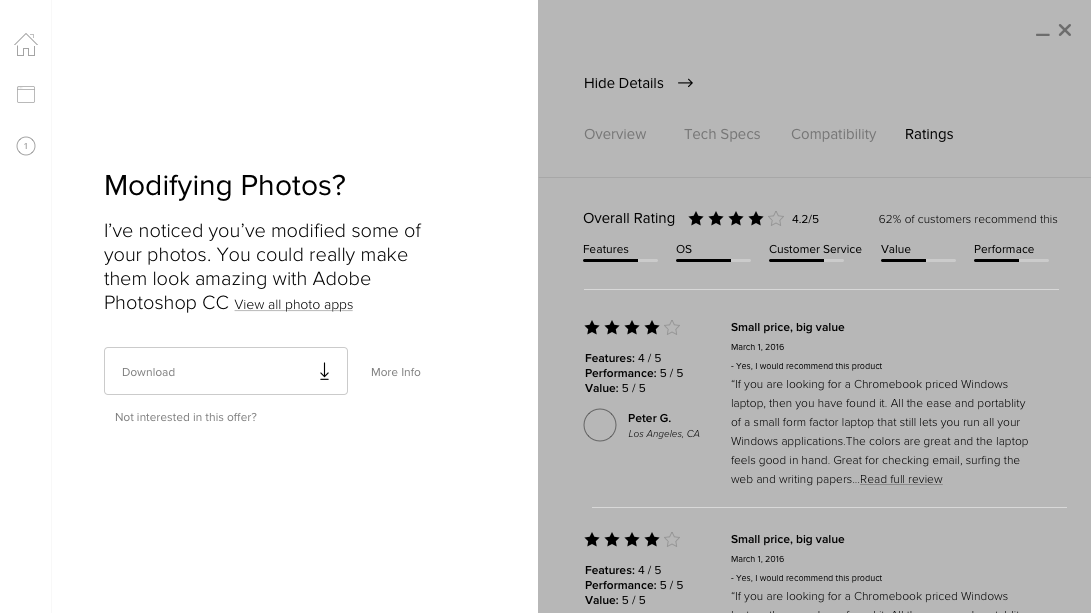
Each offer—software or hardware—was treated as a structured object:
- Overview
- Tech specs
- Compatibility
- Ratings
- Related products
This allowed users to evaluate decisions without leaving the app.
Download, Purchase, and Fulfillment
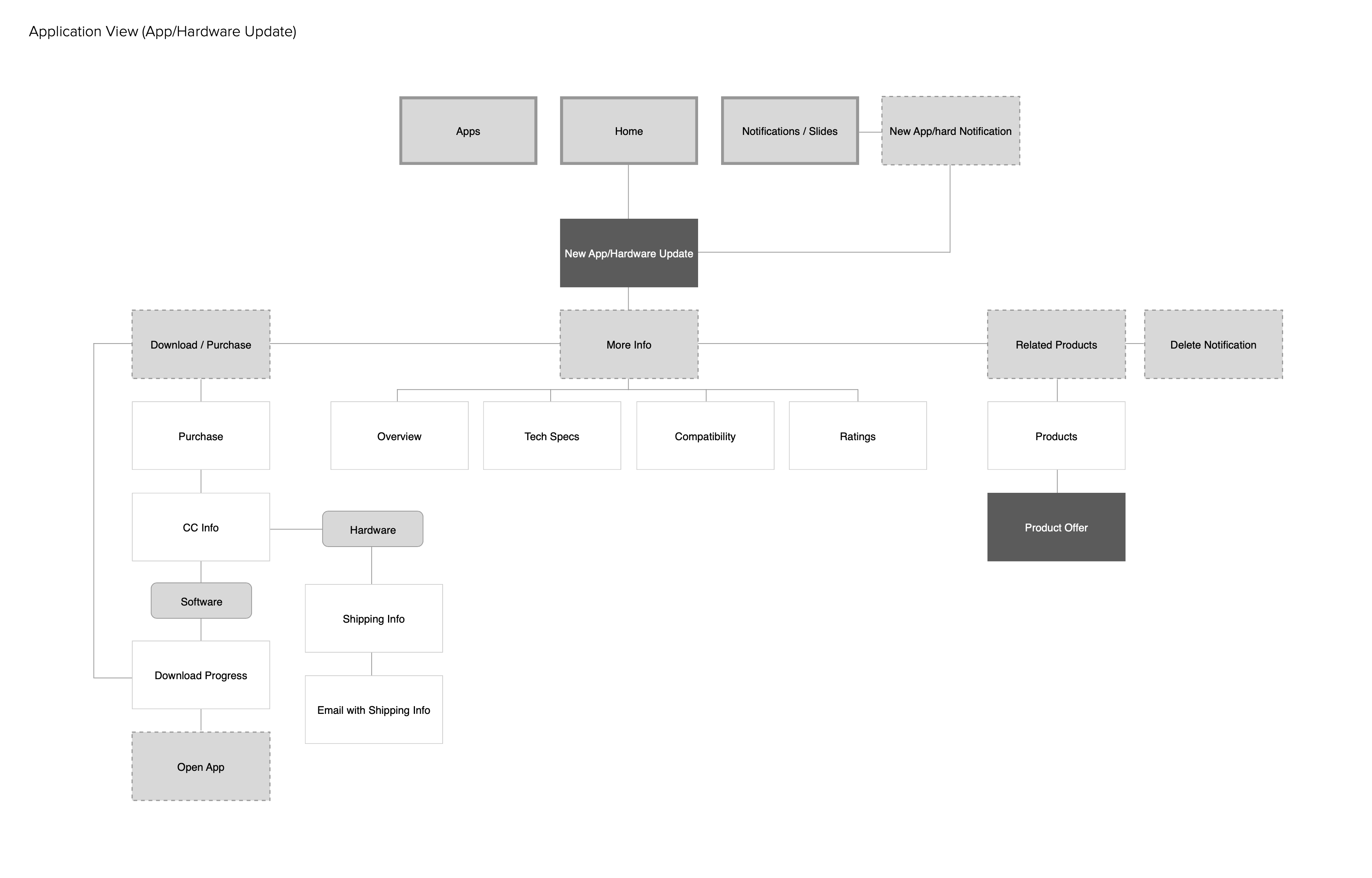
Neon explored a unified flow for:
- Purchasing software
- Downloading apps
- Ordering hardware
- Tracking shipping
- Receiving confirmation and updates
This reduced the mental tax of switching between sites, emails, and installers.
Zero-Day & First-Run Experience
The onboarding flow imagined Neon as part of a new PC’s first moments:
- Explaining what Neon is
- Setting expectations
- Establishing trust
- Making ownership feel intentional
Rather than selling immediately, the system focused on orientation.
Designing Without Precedent
At the time, there was no strong model for:
- Desktop app stores
- OEM-native commerce experiences
- Blending hardware and software retail in-system
That freedom was also the challenge.
Design decisions were guided by:
- OS metaphors
- Physical retail clarity
- Respect for user attention
- Long-term trust over short-term conversion
Why This Work Mattered
Although Neon was never shipped as a product, it served as:
- A strategic provocation
- A vision for OEM-native platforms
- An early exploration of ideas that would later become standard
Many concepts explored here—native stores, unified updates, in-system discovery—are now expected parts of modern operating systems.
What I’m Most Proud Of
- Treating commerce as part of ownership, not marketing
- Designing restraint into a revenue-adjacent system
- Anticipating the need for native distribution before it was mainstream
- Exploring how OEMs could add value without eroding trust
Closing Thoughts
Dell Neon reinforced an idea that shows up across much of my work:
The best platforms don’t shout—they explain, support, and step back.
Before app stores were obvious, before native commerce was expected, this project asked what careful, user-respecting distribution could look like on the desktop.