Most health apps are a second job. You weigh, you log, you scan, you tally — and at the end of it all you're rewarded with a wall of graphs that still don't answer the only question you actually had: am I doing okay today?
Kiwi is my answer to that. It's a single-user, AI-native health companion I built for exactly one household, with one goal: automate the tracking so I can get back to living.
The one question
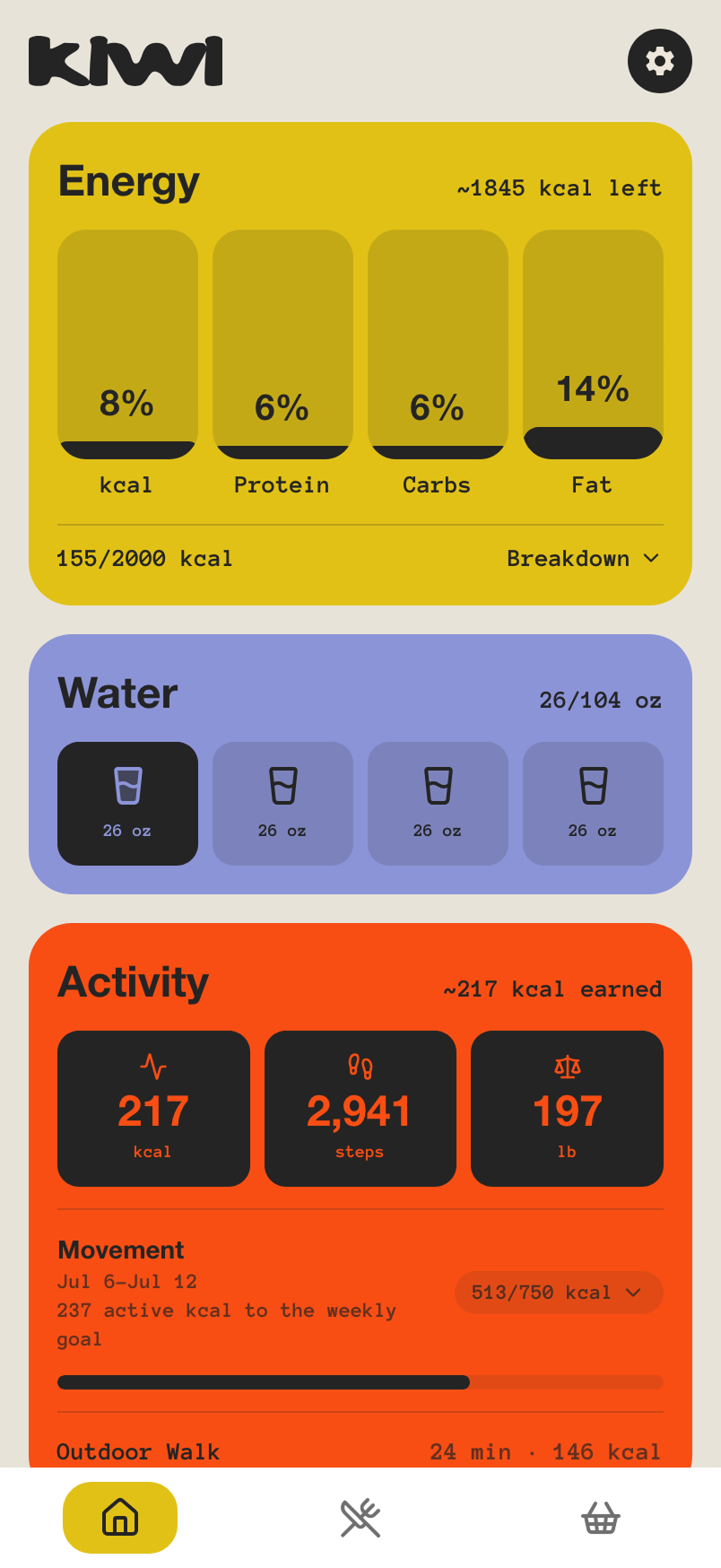
Open Kiwi and there are no dashboards waiting for you. There's a status — on track, drifting, off track — and one or two suggestions for what to eat next. That's the whole home screen by design.
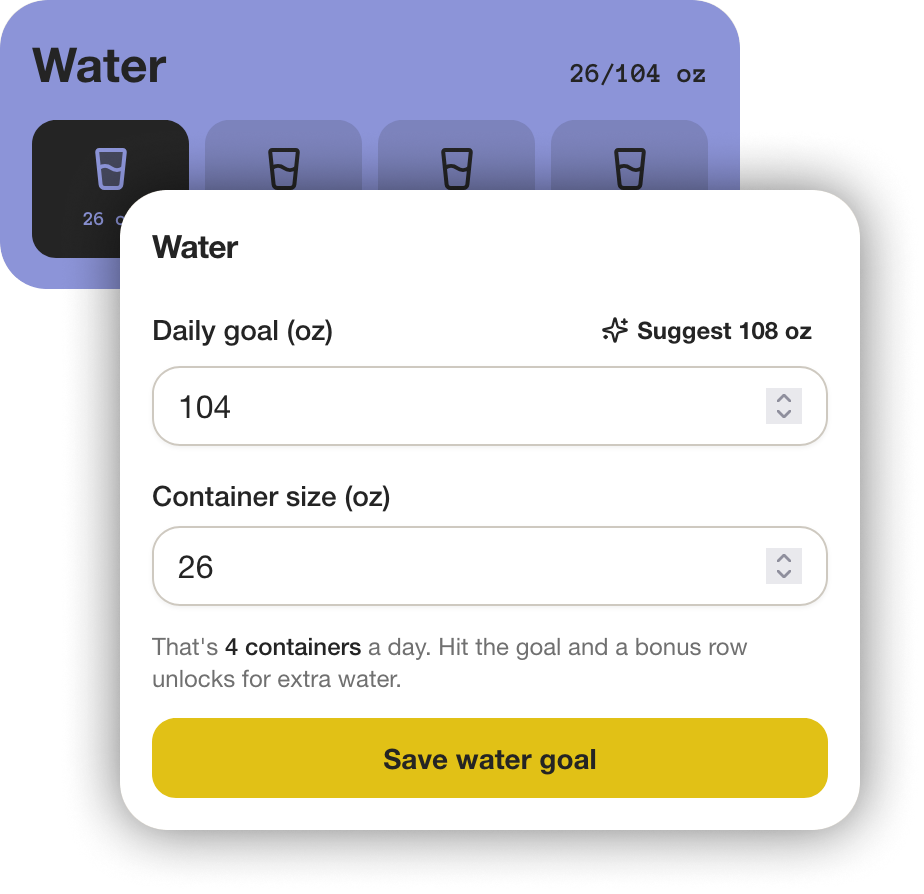
The guiding idea is stolen from good e-readers: nobody wants to fiddle with font size, line spacing, and margins. They want text that just reads well. Kiwi applies that to nutrition and fitness — opinionated defaults, ambient data, and as few knobs as I can get away with.
If the first thing you see is a graph, I've failed.
Ambient over manual
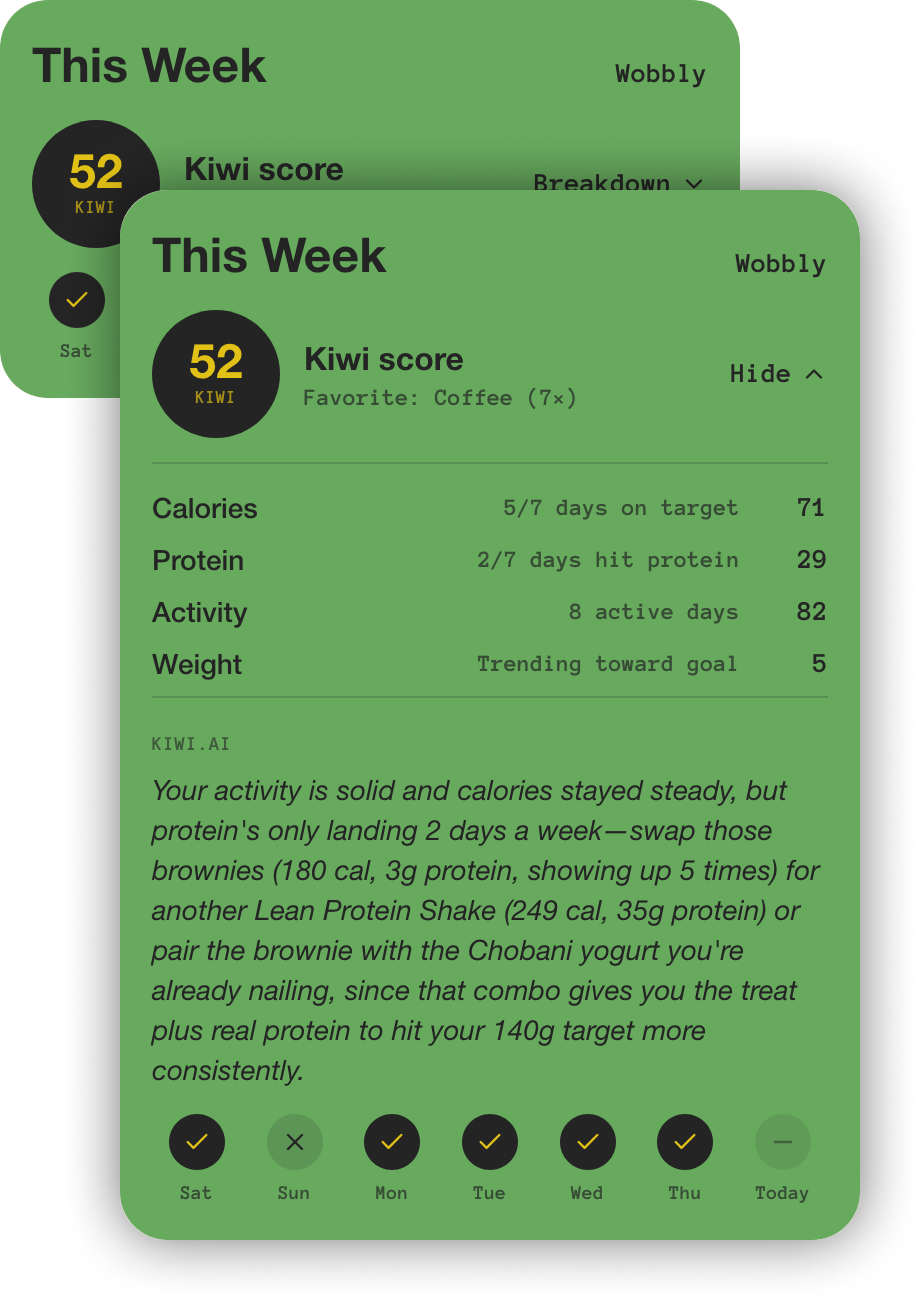
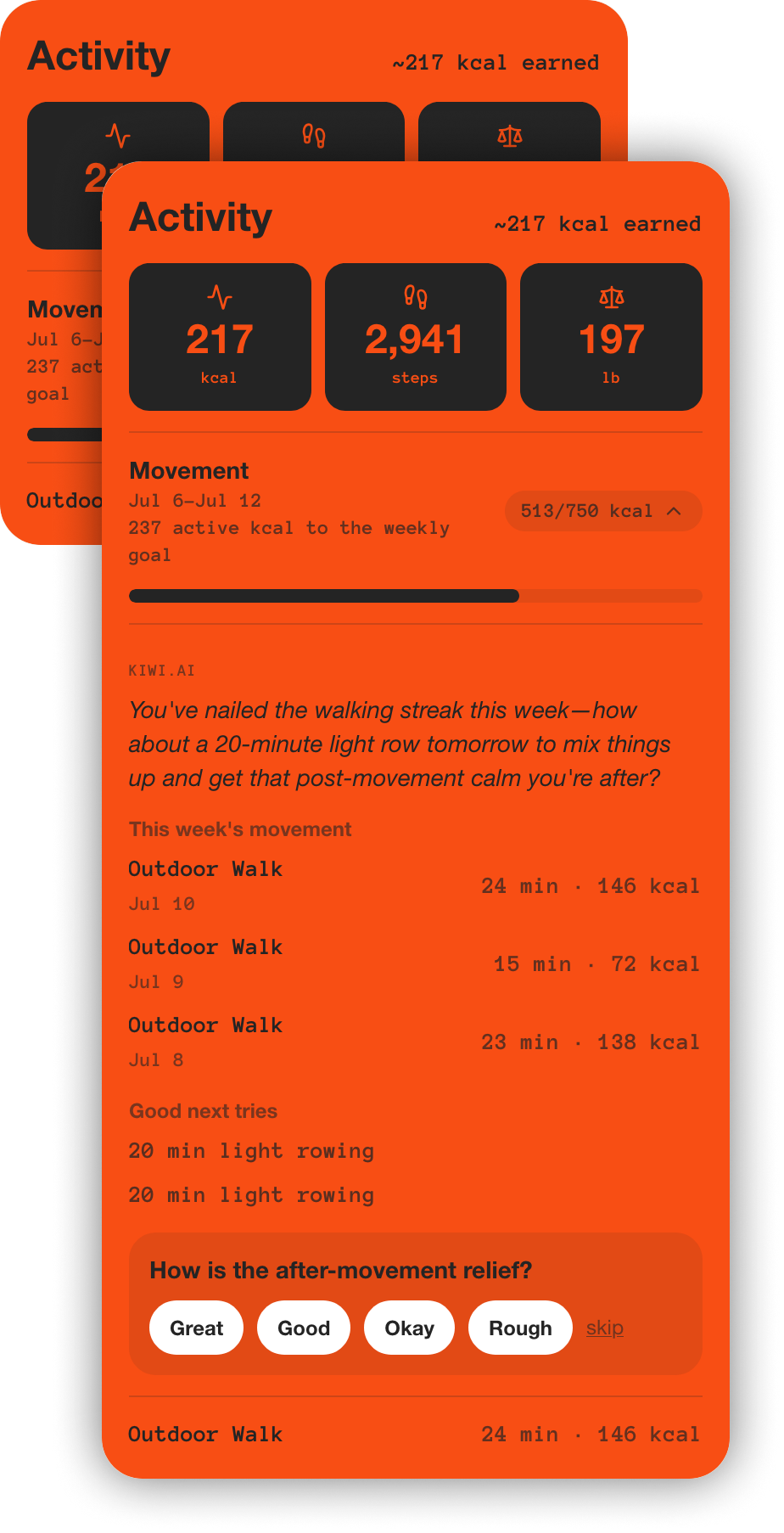
The data already exists; it's just scattered. My Apple Watch knows my workouts. My Withings scale knows my weight. So Kiwi doesn't ask me to type any of it. Apple Health quietly pushes it all in through a webhook, and it lands where it belongs — workouts, active energy, steps, weight — no manual entry required.
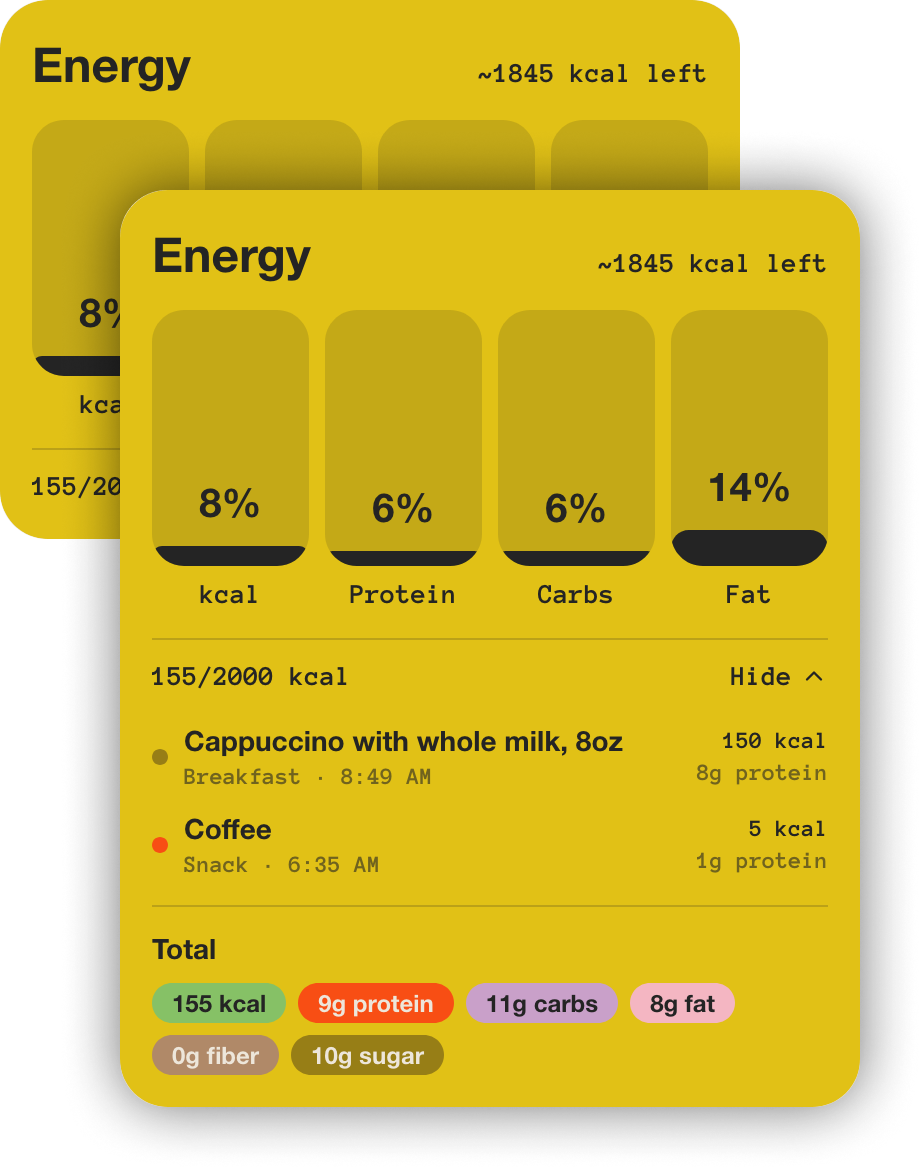
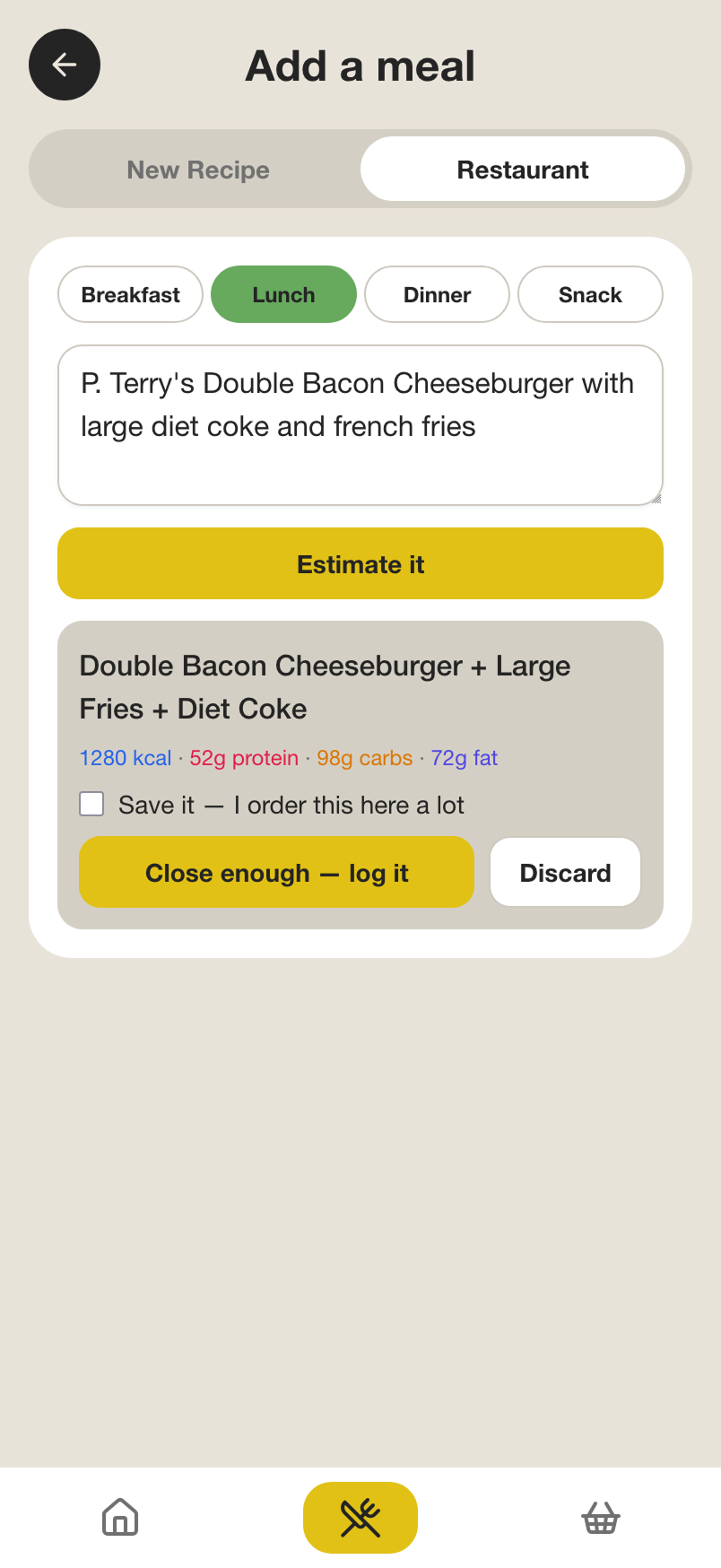
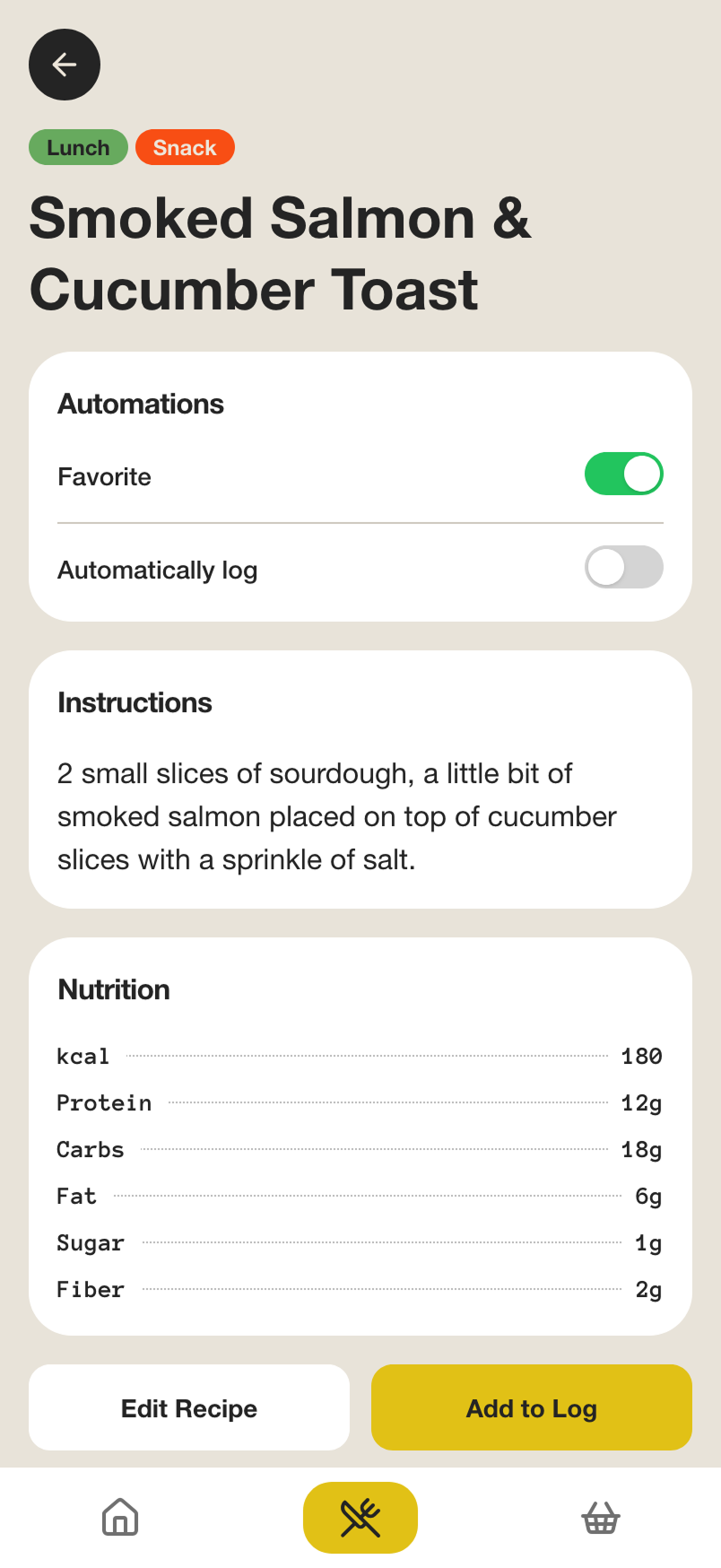
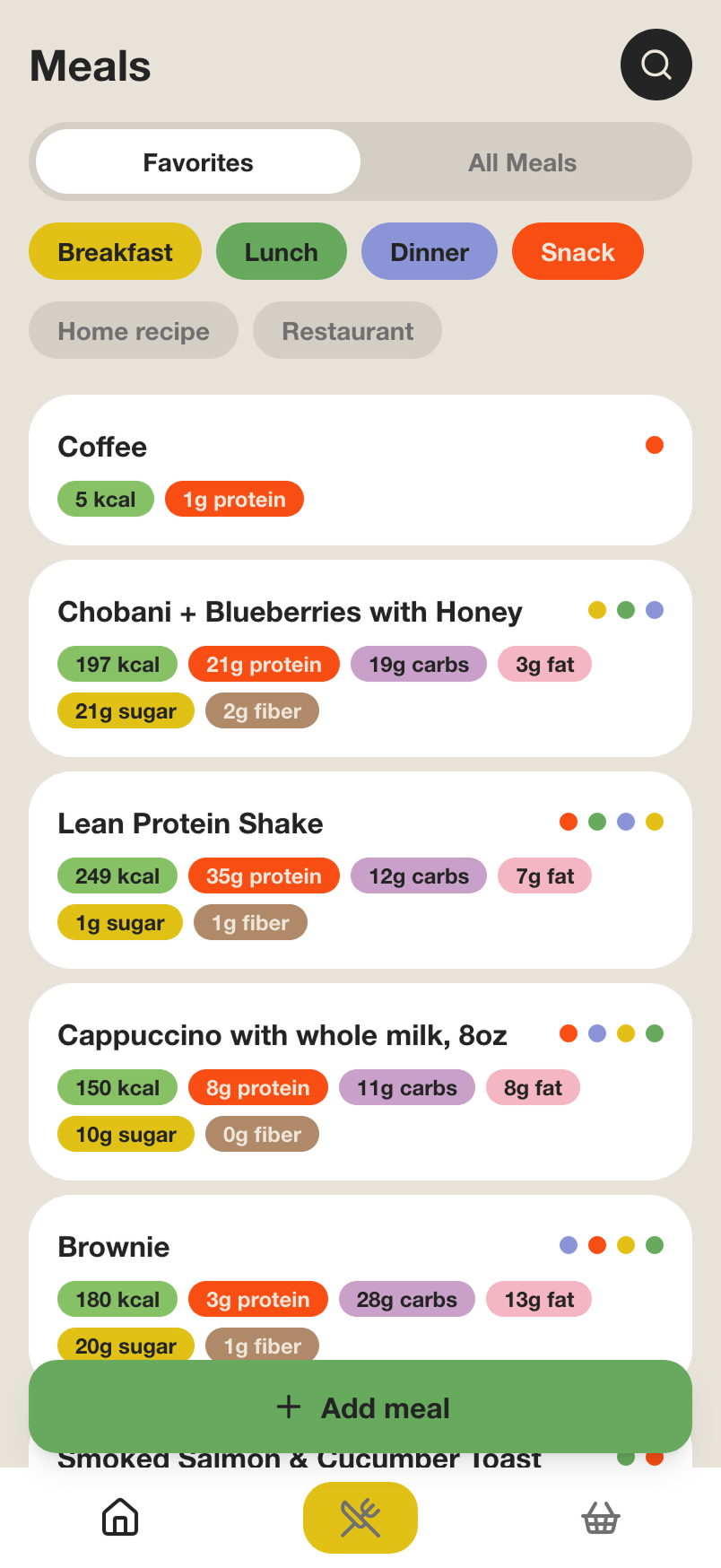
When I do log a meal, it takes seconds. I list the ingredients, Kiwi builds the recipe and estimates the macros, I confirm. Routine meals — my sad-but-reliable rotation of chicken and sweet potato — are one tap. And for packaged food, I scan the barcode and it resolves against Open Food Facts with zero fuss.
AI as a parachute, not the pilot
Kiwi is "AI-native," but not in the way that phrase usually means. There's no chatbot demanding attention. Almost every interaction makes zero AI calls — the app leans on deterministic rules and heuristics first. The language model only steps in for the messy edges, like turning "two eggs, some spinach, a splash of olive oil" into a real recipe with real numbers. Cheapest viable model, cached and reused. AI is the parachute you're glad exists but hope never to pull.
Guidance over guilt
Kiwi doesn't say "1,240 calories remaining." That framing turns every meal into arithmetic. Instead it says something like "You're on track — a lighter dinner like salmon and a salad keeps you there."
The movement side works the same way. Instead of streaks and workout-program jargon (I don't love exercising, and Kiwi knows it), there's a gentle weekly active-calorie goal and some low-pressure encouragement. No guilt, no chains of little green rings to break.
Boring on purpose
Under the hood Kiwi is deliberately unglamorous: Next.js, SQLite, a Docker container on a Fedora box in my house, tucked behind a Cloudflare tunnel. It runs unattended. It's a PWA I installed to my phone's home screen, so it feels like an app without being one.
That's kind of the point. The interesting part of Kiwi isn't the stack — it's what the stack doesn't make me do.
Where it's headed
Apple Health, pantry awareness, shopping lists, and data export are all live. Next up: Oura for sleep and readiness, and treatment scheduling so recurring stuff (medicated shampoo night, of all things) can coordinate with the rest of my week. Eventually a native app and a watch complication for true at-a-glance status.
But the north star won't change. Kiwi exists to answer one question in under five seconds, and to make me feel like I can check it without dread.
Am I on track? — that's all I want to know. Kiwi is the app that just tells me.