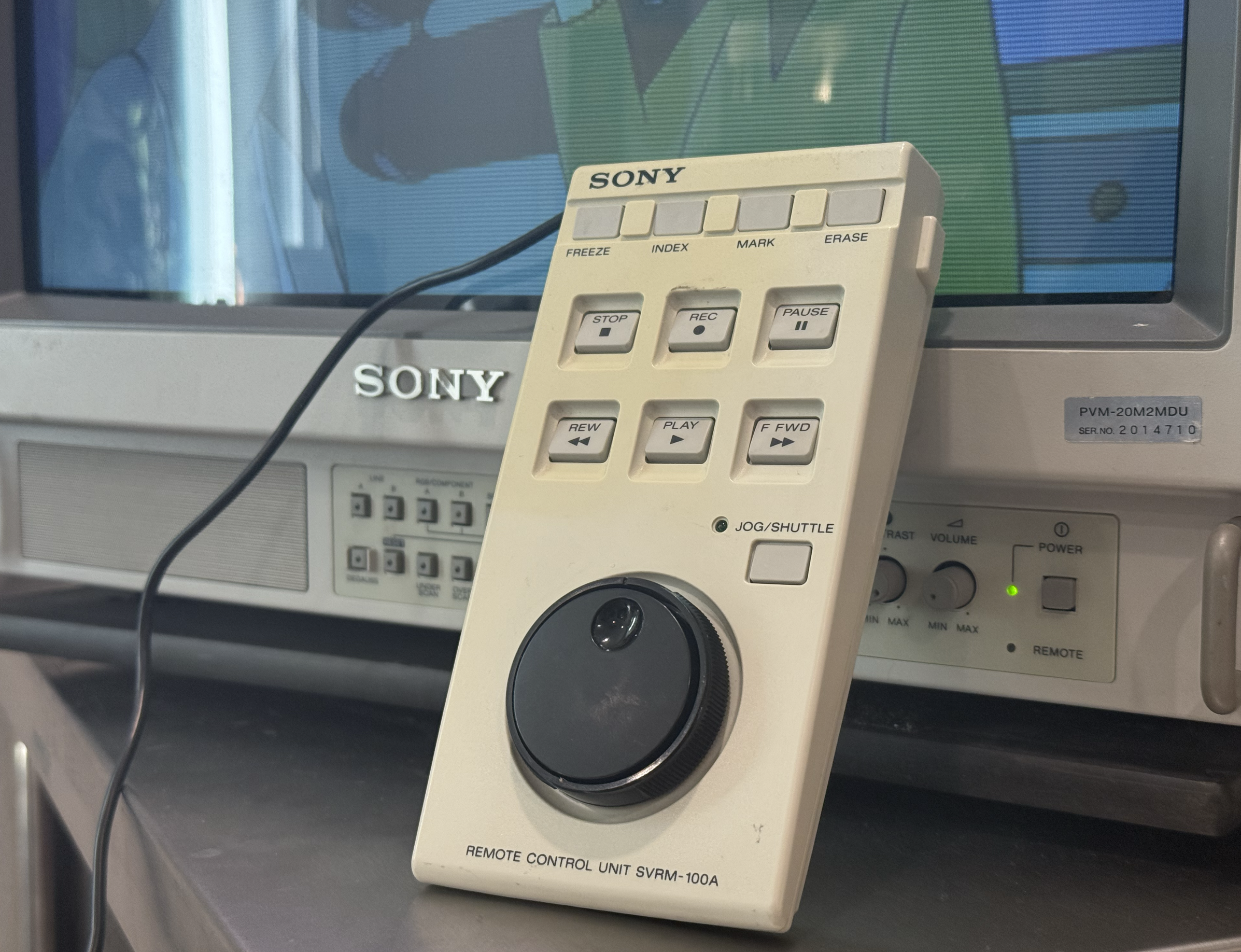
A while back I made a trip to a medical recycling center and came home with a Sony PVM-20M2MDU, the SVO-9500MD VHS deck that lived under it, and a Sony SVRM-100A wired editing remote that I had no plan for. The monitor and the deck got used immediately. The remote sat in a drawer for a year.
Then I set up MiSTerFin, which puts a Jellyfin front end on the MiSTer, and it worked so much better than I expected. My whole library, on the PVM, in a menu that looks like it belongs on a CRT. The only wrong note was the input—browsing it with a modern controller felt like driving a '78 Cadillac with a smartphone.
I remembered the remote.
What's actually in the remote
The SVRM-100A looks like a wired remote, but it isn't a dumb button matrix. It sends Sony SIRCS frames—the same protocol as Sony's IR remotes, 12-bit, device address 0x09—down the wire instead of through an LED. Which is great news, because it means one data line carries every button and every jog/shuttle position, and I don't have to trace out a matrix.
Three pads on the remote's board: S (signal), V (5V), G (ground). I dropped a Raspberry Pi Pico inside the case, tapped S through a 10kΩ/15kΩ divider to bring the 5V signal down to ~3V so it doesn't cook the Pico's 3.3V GPIO, and ran a USB cable out through the original strain relief.
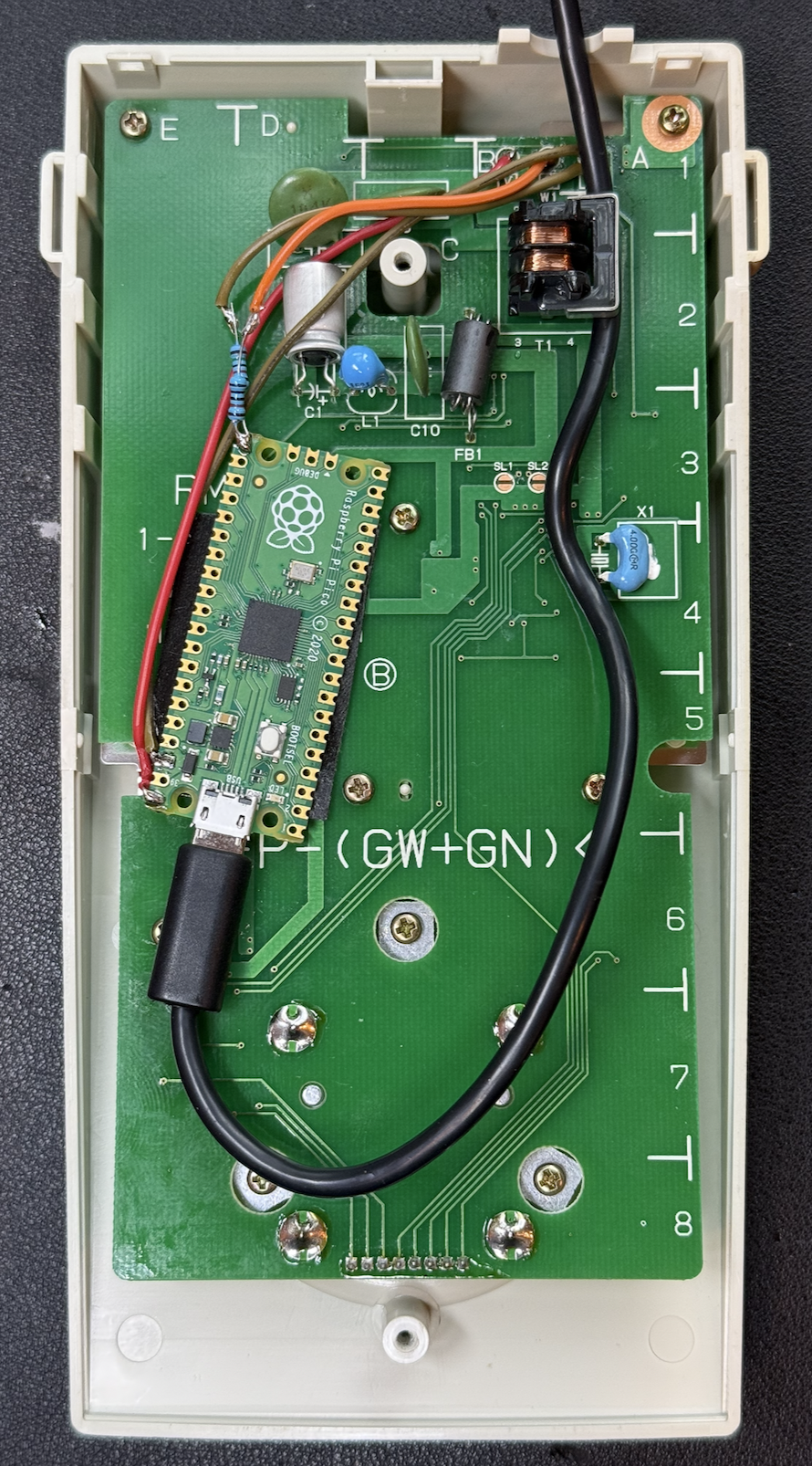
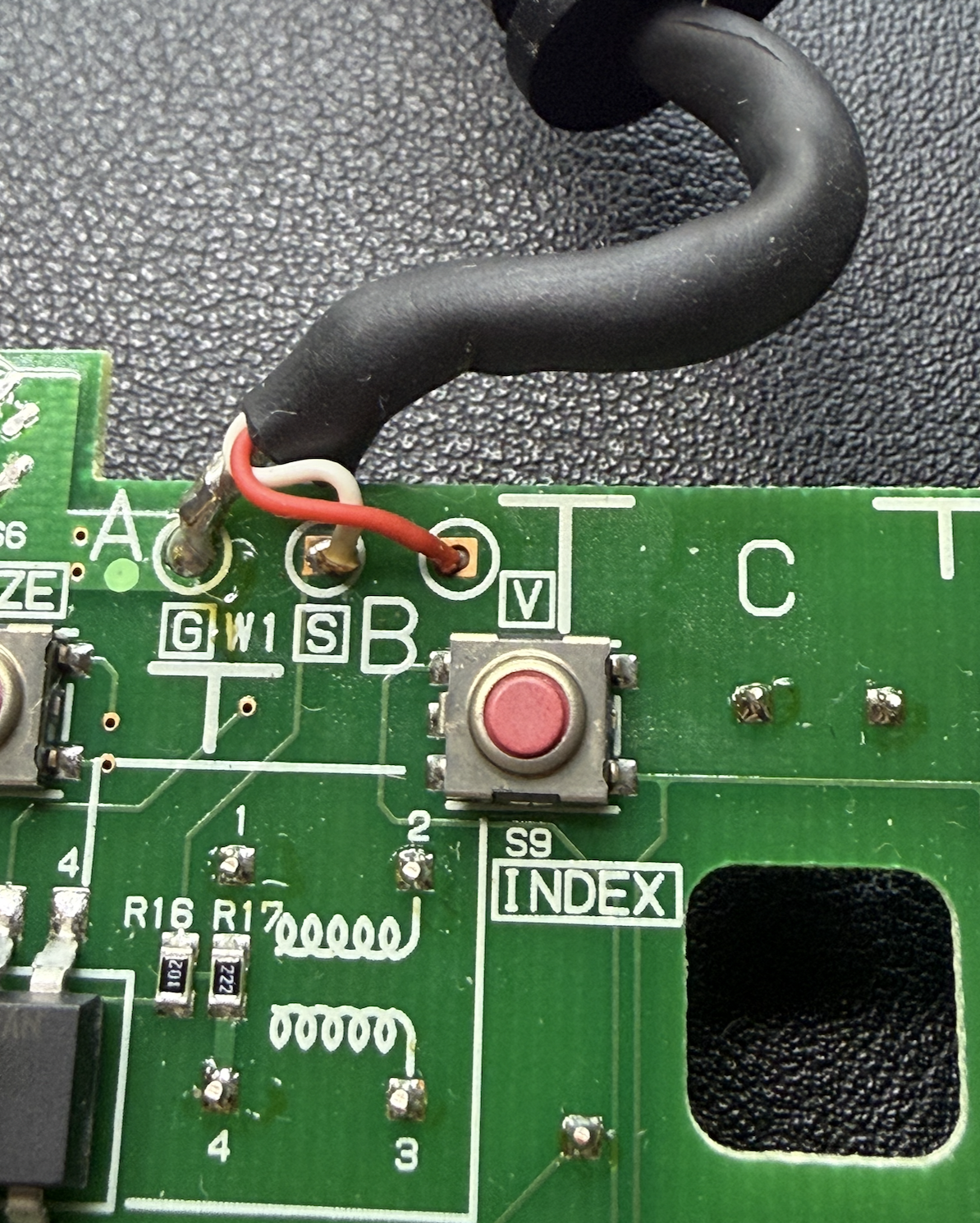
Two resistors and a $4 microcontroller. That's the entire bill of materials on top of the remote itself.
What it does now
The firmware decodes the SIRCS frames and presents the Pico as three USB devices at once:
- Keyboard — F12–F19 and regular keypresses, which is how I drive macOS apps
- Media keys — play/pause, next/previous, volume, which work everywhere without setup
- Gamepad — a D-pad and buttons, which is what MiSTerFin and the MiSTer cores actually want
Everything runs through a profiles.json file, so remapping is editing JSON, not reflashing intent into the firmware. Actions can be a single key, a combo, a media command, a gamepad input, or a macro with timing delays.
The jog wheel is volume. The shuttle ring is seek, with acceleration—the further you twist it, the faster it scrubs, which is exactly what the ring was designed to feel like in the first place. PLAY and PAUSE do the obvious thing. The transport buttons that used to cue tape now move through a Jellyfin library.
Why bother
There's no functional argument here. A $12 remote would do this. But scrubbing through an episode with a real shuttle ring, on a PVM, using the remote that came from the same shelf as the deck, is a specific kind of good that a plastic clicker can't reproduce.
Code and wiring notes are up at github.com/east35/svrm-100A.